
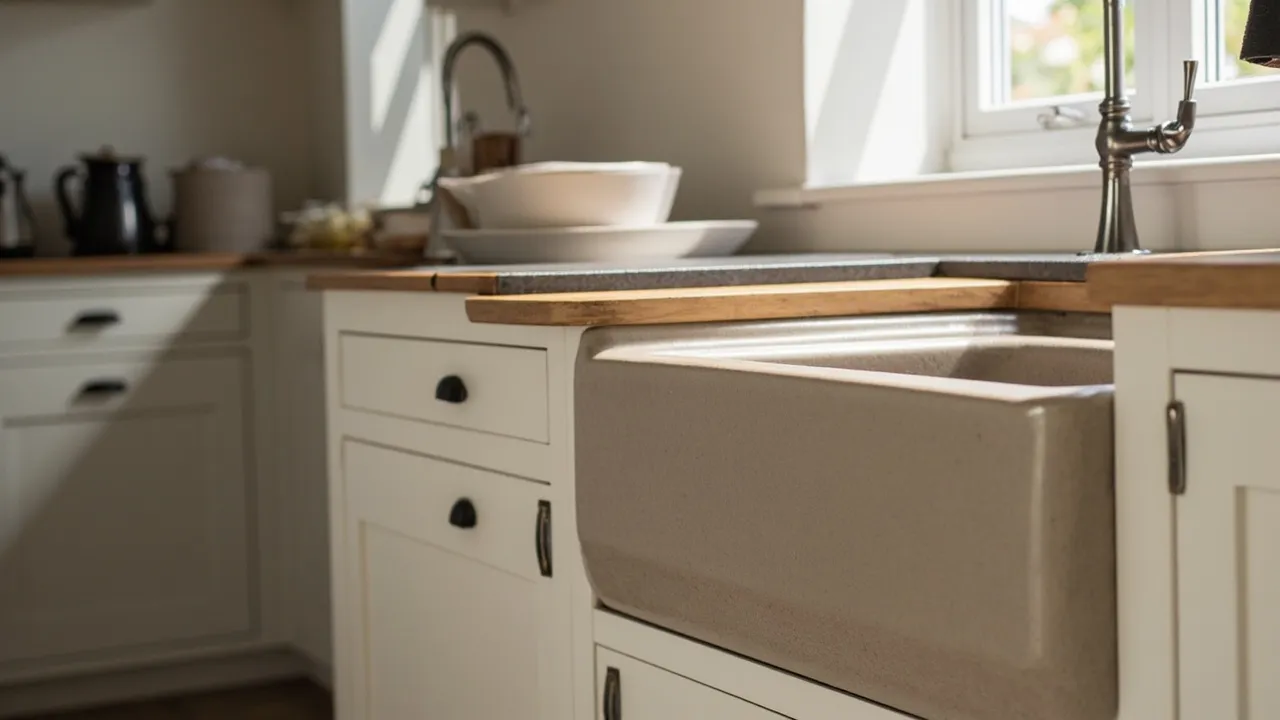
A Belfast sink is a deep, rectangular ceramic sink, one of the two classic kinds of butler's sink. It is heavy, so in a handmade kitchen it sits on a purpose-built base unit, with the worktop carefully cut, sealed and grooved around it.
Deep ceramic sinks belong in Yorkshire kitchens: farmhouses, stone terraces and mill cottages where muddy boots, dog bowls and big roasting tins all end up at the sink. We don't sell sinks, but we build the cabinetry they sit in, by hand in our workshop and showroom at Crossley Mills in Honley. This guide covers the joinery side of getting one right.
Key takeaways
- Belfast and London sinks are both butler's sinks; the classic difference is the overflow weir on a Belfast sink.
- A ceramic sink is heavy, so it needs a dedicated base unit built to carry it, not a standard cupboard.
- You can fit one into a wooden worktop if the cut edges are sealed and the drainer grooves are cut and finished properly.
- We make the cabinetry; a qualified plumber connects the sink and waste.
What is the difference between a Belfast sink and a butler sink?
Wikipedia's entry on sinks describes a butler's sink as "a rectangular ceramic sink with a rounded rim which is set into a work surface". It says there are generally two kinds: the London sink and the Belfast sink. So it is a type of butler sink rather than something different.
The same entry says London sinks "were originally shallower than Belfast sinks", and that the primary difference, past and present, is that the Belfast type "is fitted with an overflow weir" which drains water away before it can spill over the edge. So when you're comparing a Belfast vs butler sink, check whether it has an overflow and how deep the bowl is.
| Belfast | London | |
|---|---|---|
| Family | Butler's sink | Butler's sink |
| Material | Ceramic | Ceramic |
| Overflow weir | Yes | No (the classic difference) |
| Depth | Originally the deeper of the two | Originally shallower |
| What it means for the cabinetry | Both are heavy and need a base unit built for the sink you have chosen | |
Why are they called Belfast sinks?
The names point to the cities, Belfast and London, but we haven't found a reliable source that explains exactly how they came about, so we won't guess. What we can say is that they aren't new: Wikipedia shows a Victorian example at Spring Hall in Halifax, right here in West Yorkshire.
Do Belfast sinks need a special base unit?
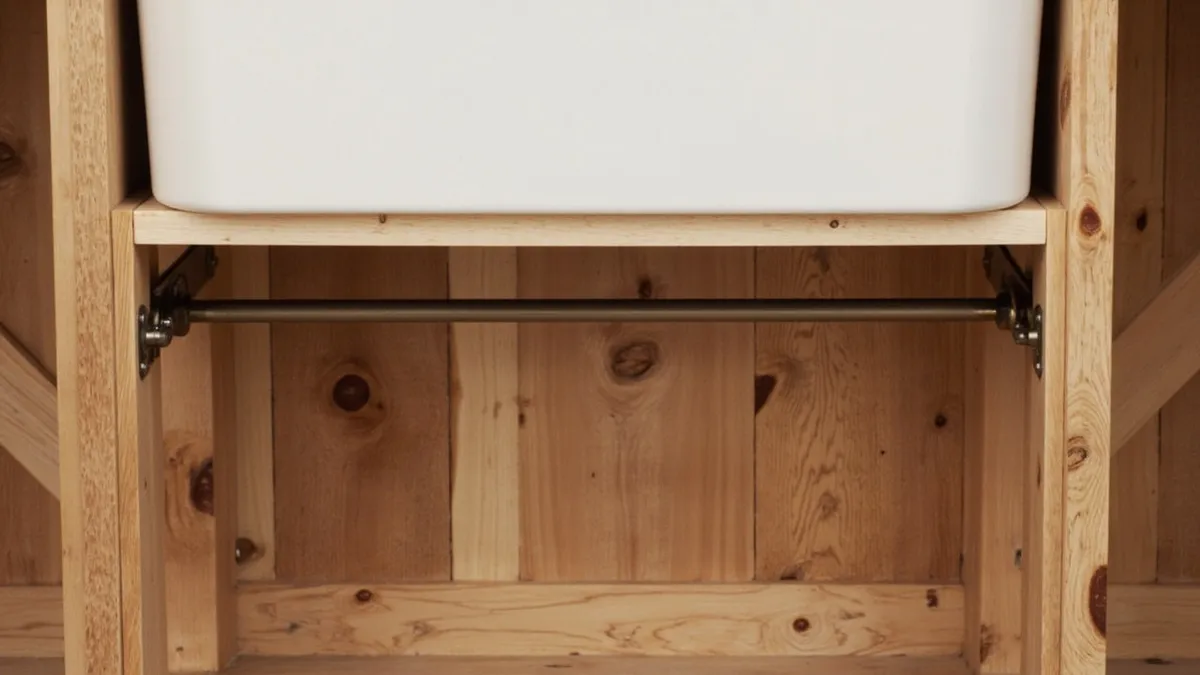
Yes. A ceramic sink is heavy before you fill it with water and pans, and an ordinary cupboard isn't designed to carry that weight. In a handmade kitchen we build a dedicated sink base unit around the sink you've chosen. It is the cabinetry we take most care over in any kitchen.
What we'd do: a rule of thumb from the workshop
- Have the sink on site before we finalise the unit. Ceramic sinks vary, so we measure the actual sink rather than a drawing of it.
- Carry the weight on the frame, not the doors or the worktop. We build a solid support frame inside the carcass, joined with traditional joints such as mortise and tenon, so the load goes straight down to the floor.
- Level the support first. Old Yorkshire floors are rarely flat, so we level the bearers for the sink and scribe the plinth to the floor.
- Leave room for the plumber. We plan the inside of the unit so the waste and pipework can be reached later.
- Use timber that copes with damp. The sink base sees more water than any other cupboard, so we finish the inside as well as the outside.
Exposed front or under-mounted: how should a Belfast sink unit look?
There are two common ways to fit the sink and its unit, and each changes the joinery.
Exposed front
The front of the sink stands proud of, or flush with, the cabinet doors, with the worktop meeting it at each side. This is the traditional farmhouse look. The cabinet face frame is shaped around the sink, so we scribe it closely to the ceramic.
Set under the worktop
The worktop runs across the front, and the sink sits beneath a cut-out with the front hidden behind a rail or a false drawer front. It gives a tidier line and suits a modern Shaker kitchen; our Shaker kitchens work well either way. The cut edge of the worktop is then exposed to water all round, so sealing matters even more.
Can you put a Belfast sink in a wooden worktop?
Yes. A ceramic sink in a wooden worktop looks warm and traditional, but timber and standing water don't mix, so the detail around the sink is what decides how well it lasts.
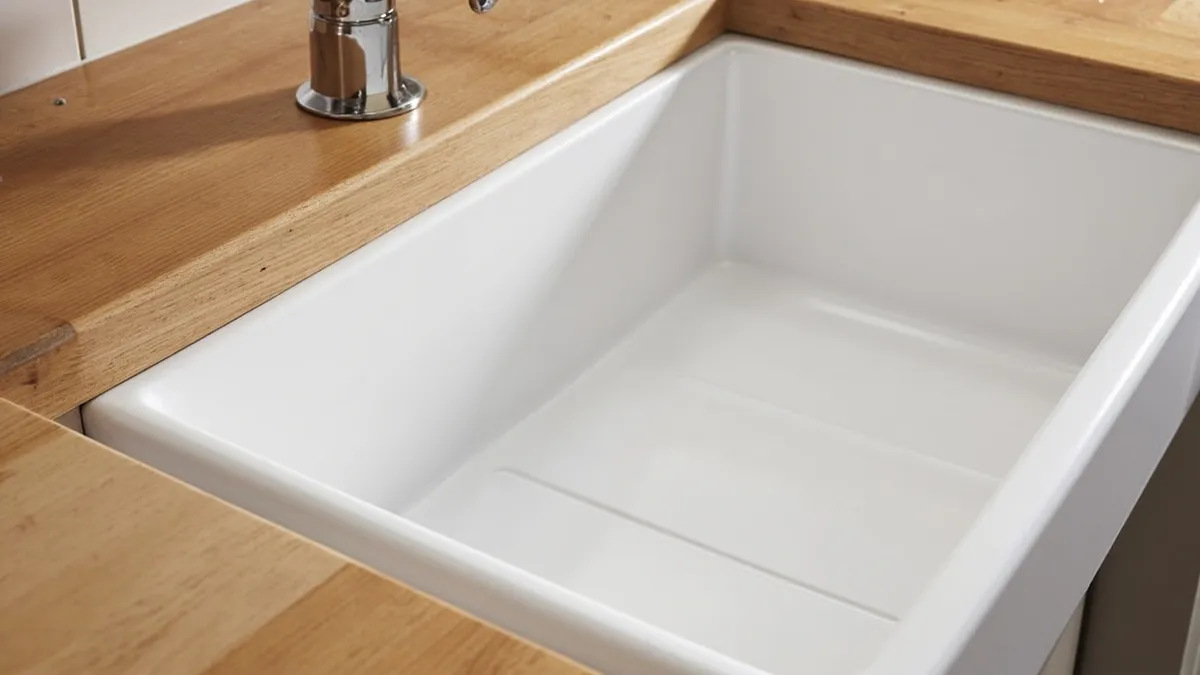
- Seal the cut edges of the worktop thoroughly before the sink goes in. End grain soaks up water quickly.
- Cut drainer grooves into the worktop beside the sink so water runs back in, and finish the grooves as well as the flat surface.
- Keep a small gap or a flexible seal between ceramic and timber, so the wood can move with the seasons.
- Re-oil the worktop around the sink more often than the rest of the kitchen.
We won't repeat the full timber advice here: our guide to wooden worktops covers which woods cope best near a sink, and how to oil wooden worktops takes you through the upkeep step by step.
Who fits and plumbs a ceramic sink?
We design, make and install the cabinetry and worktops, and Daniel oversees the installation. We don't sell sinks, taps or appliances, and we don't do plumbing ourselves. A qualified plumber connects the sink, waste and taps as part of the kitchen project, and the work is covered by Building Regulations, including Part G (sanitation, hot water safety and water efficiency), Part H (drainage and waste disposal) and Part P (electrical safety); the Planning Portal's Approved Documents set out the guidance.
The order on the day matters: base unit fitted and levelled, sink set in place, worktop scribed around it, then the plumber connects up. We plan that sequence in the written proposal so nobody is waiting on anyone else. For how this fits into the wider job, see our design and making process.
Is a Belfast sink right for your kitchen?
A deep ceramic sink suits busy homes: big pans, muddy hands after a wet Pennine walk, washing the dog. It also sits naturally in a farmhouse or painted kitchen. The things to weigh up are its weight, the space it takes from the base run, and whether you like the look of a big white sink in the middle of the room.
Before you buy a sink, check:
- Whether you want an overflow (a Belfast style) or not.
- Whether you prefer an exposed front or a sink set under the worktop.
- Your worktop material, and whether you're happy to look after timber around a sink.
- Where the existing waste and water pipes are.
- Which tap style you like, as it affects the worktop or wall behind.
Bring that list, and the sink details if you have them, to a free consultation. Our handmade kitchens range shows how a ceramic sink sits in oak, pine and painted cabinetry.
A handmade kitchen built around your Belfast sink
At Oak & Pine by Design, Daniel Fitzpatrick leads every kitchen himself, from a free consultation to installation. Book a showroom visit at Crossley Mills, Honley (by appointment) to see our joinery and worktop samples, and you're welcome to visit and see your kitchen being made. We work with homes across Yorkshire, including Huddersfield.
Call 01484 666 333, email info@handmadekitchensyorkshire.co.uk or use our contact page. Explore our bespoke handmade kitchens first.
Frequently asked questions
Do you supply sinks?
No. We don't sell sinks, taps, appliances or handles. You choose and buy the sink, and we build the base unit and worktop around that exact sink in our Honley workshop. A qualified plumber connects it, and we plan the installation so the joinery and plumbing work happen in the right order.
Can a ceramic sink go in a painted kitchen?
Yes. A white ceramic sink looks at home in a painted kitchen, whether the front is exposed or tucked under the worktop. We hand-paint in any colour and can colour-match, and we usually suggest a timber or hard-wearing worktop around the sink, depending on how you use the kitchen.
Will water damage a wooden worktop around the sink?
It can if it is neglected. Sealed edges, well-finished drainer grooves and regular oiling keep timber in good order beside a ceramic sink. Wipe up standing water, especially around the joint, and re-oil when water stops beading on the surface.
Can you fit a Belfast sink into an existing kitchen?
Often, yes, but a standard cupboard usually isn't strong enough. We'd make a new sink base unit and adapt or replace the worktop. Send us photos and measurements, and we'll tell you honestly whether it's worth doing or better as part of a new kitchen.