
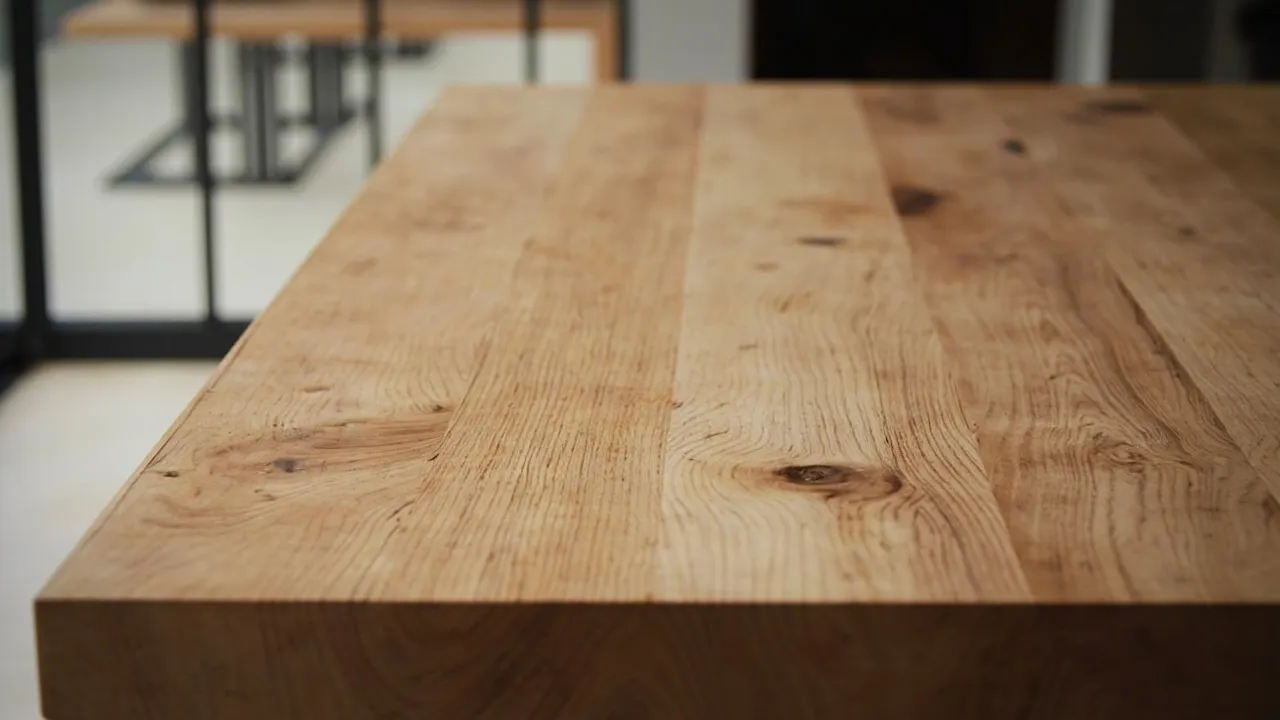
To oil a wooden worktop: clean it, sand lightly with fine-grit paper, remove the dust, then apply a thin coat of worktop oil with a lint-free cloth, working along the grain. Wipe off the excess after the time on the tin, let it dry, and repeat for several thin coats. New worktops need several coats before use. After that, re-oil every few months, or whenever water stops beading on the surface.
At Oak & Pine by Design, we make and hand-finish solid wood worktops in our Honley workshop. Here's exactly how we'd look after one.
What you'll need
- A worktop oil suitable for food-contact surfaces (check the label)
- Lint-free cotton cloths
- Fine sandpaper or abrasive pads (around 180 to 240 grit)
- A soft brush or vacuum for dust
- A slightly damp cloth for cleaning
How to oil a wooden worktop, step by step
- Clean the surface. Wipe away crumbs, grease and residue with warm water and a mild soap. Let it dry completely.
- Sand lightly. Rub along the grain with fine-grit paper to open the surface and remove small marks. For deeper marks, start with a coarser grit and work finer.
- Remove all dust. Brush or vacuum, then wipe with a barely damp cloth and let it dry.
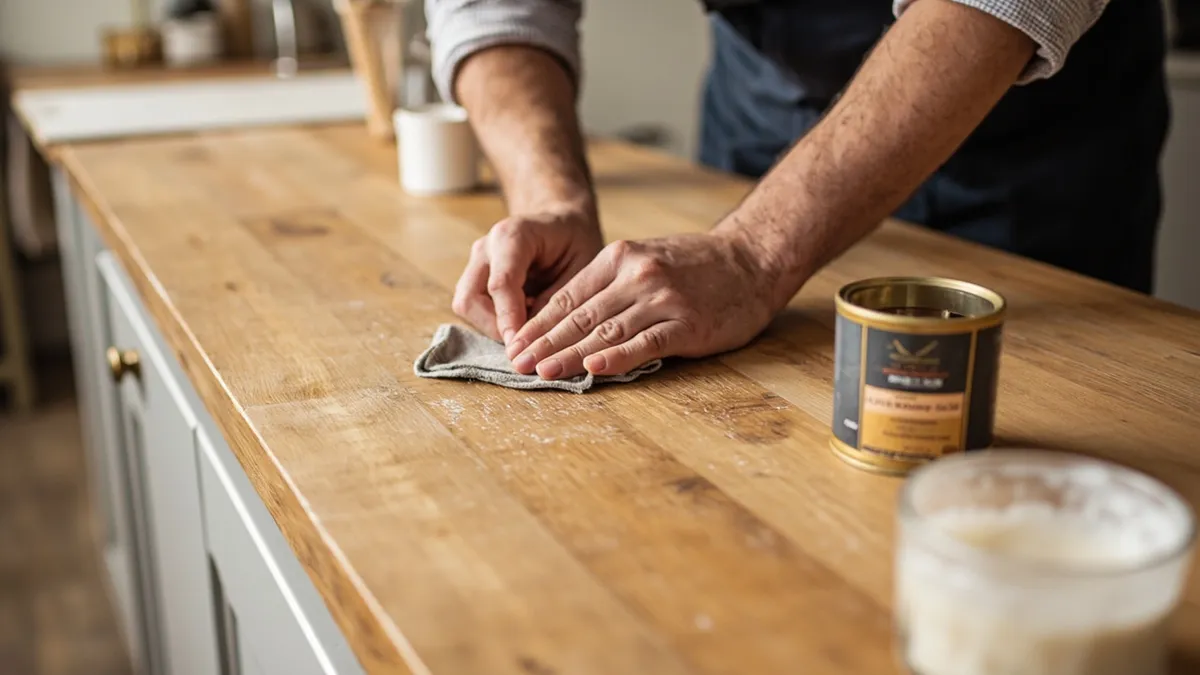
- Apply a thin coat. Pour a little oil onto a cloth and work it into the wood along the grain. Thin coats soak in and cure properly. Thick coats stay sticky.
- Wipe off the excess after the time recommended on the tin, so no oil sits on the surface.
- Let it dry. Follow the manufacturer's drying time, usually several hours.
- Repeat. New worktops need several coats. Pay extra attention to end grain, edges and the area around the sink.
Safety tip: oily rags can self-heat and catch fire. Lay them flat outdoors to dry, or soak them in water before disposal.
How often should you oil wooden worktops?
| When | How often |
|---|---|
| New worktop | Several coats before first use |
| First few months | More often, e.g. monthly |
| After that | Every few months |
| Sink and hob areas | More often than the rest |
| Any time | When water stops beading on the surface |
The water test: drip a little water on the worktop. If it beads up, the oil is doing its job. If it soaks in or darkens the wood, it's time to re-oil.
Want worktops made and finished by hand? Talk to our Honley workshop.
Which oil is best for wooden worktops?
- Dedicated worktop oils are blended for kitchen use and are the easiest choice.
- Danish oil gives a slightly more protective, satin finish.
- Tung oil is a traditional, natural oil that builds a durable finish with several coats.
- Hardwax oils give extra resistance to water and stains.
Whatever you choose, check it's suitable for food-contact surfaces, and stick with the same type when you re-oil.
Day-to-day care for wooden worktops
- Wipe up water and spills promptly, especially around the sink
- Use a chopping board. Cutting directly on the surface scores it
- Use trivets for hot pans
- Clean with a soft, damp cloth and mild soap, not harsh chemicals
- Don't leave wet cloths or kettles sitting on the wood
How to fix common problems
Water marks and dark stains
Sand the area back along the grain until the mark fades, then re-oil in several thin coats to blend it in.
Scratches and knife marks
Light scratches often disappear with a light sand and re-oil. Deeper ones need coarser paper first.
Sticky surface
Too much oil was left on. Wipe with a cloth dampened with a little oil to lift the excess, or sand lightly and apply a thinner coat.
Frequently asked questions
How often should I oil my wooden worktop?
Several coats when new, more often in the first few months, then every few months, or whenever water stops beading.
Can I use olive oil or vegetable oil on a worktop?
It's not recommended. Cooking oils can go rancid and stay sticky. Use a proper worktop oil.
How long should oil dry before using the worktop?
Follow the drying time on the tin. Allow extra time before heavy use after the final coat.
Do new wooden worktops need oiling?
Yes. Even pre-oiled worktops benefit from extra coats, especially on the edges, the ends and around the sink.
Solid wood worktops, made and finished by hand
A wooden worktop that's properly made and finished will reward you for decades. We build solid wood worktops, islands and kitchens by hand in our Honley workshop, led by master craftsman Daniel Fitzpatrick. See our painted kitchens with solid wood worktops, or explore all our handmade kitchens.
Visit us at Unit 3, Crossley Mills, Honley, HD9 6PL.
Book a showroom visit or call 01484 666 333.