
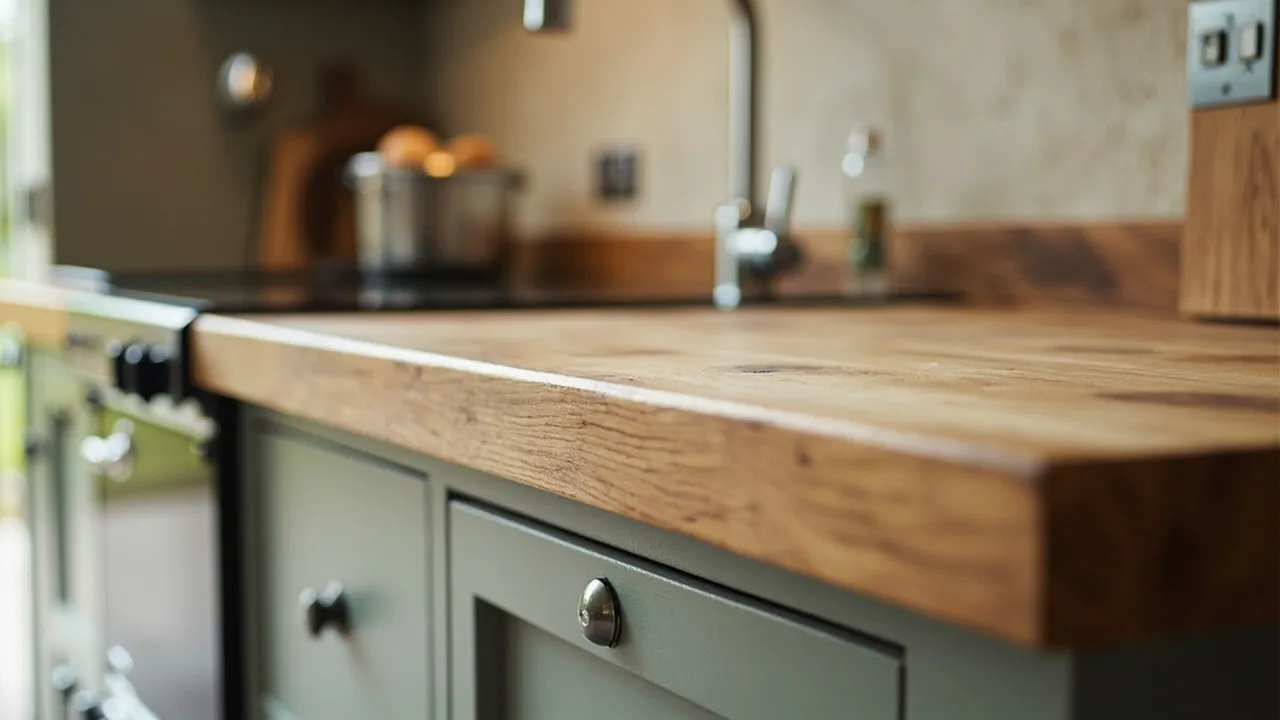
Wooden worktops are warm, natural and one of the most affordable natural worktop materials, typically around £300 to £900 for a 5-metre run in the UK. Unlike stone or laminate, solid wood can be sanded and re-oiled when it's marked, so it can last for decades. The trade-off is care: wood needs oiling and must be kept dry around the sink.
At Oak & Pine by Design, we make solid wood worktops, islands and kitchens by hand in our Honley workshop in West Yorkshire. Here's our honest guide to wooden worktops, and which timber to choose.
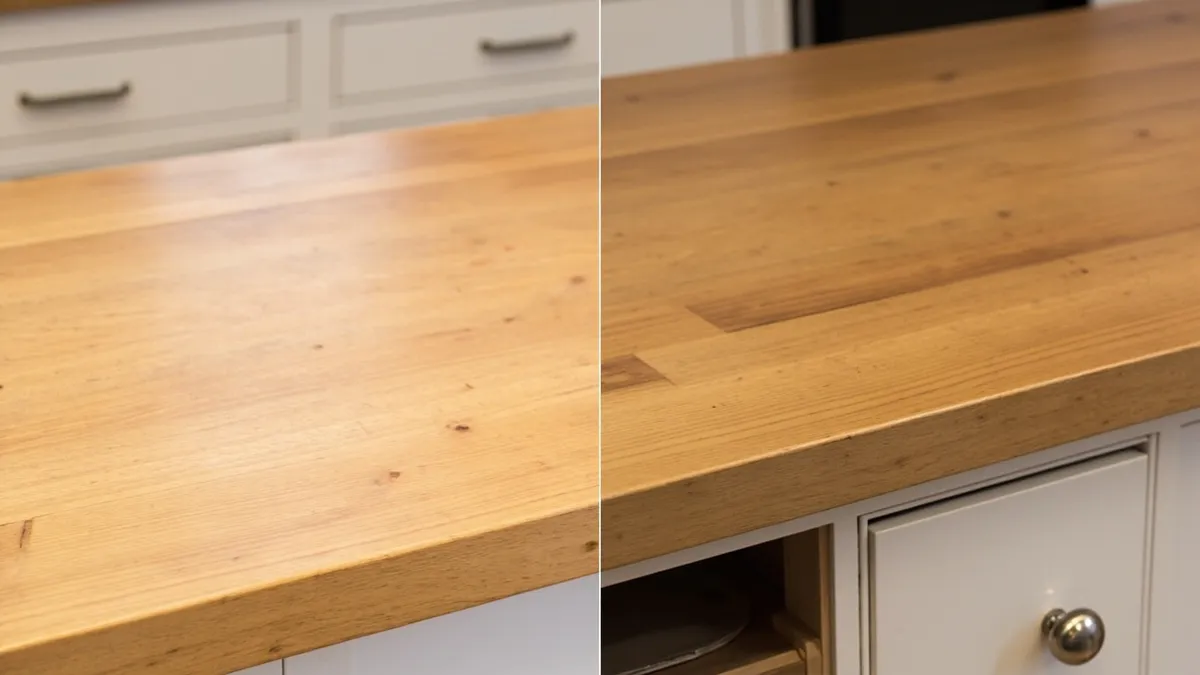
Pros and cons of wooden worktops
| Pros | Cons |
|---|---|
| Warm, natural look that suits any style | Needs regular oiling |
| Marks can be sanded out and refinished | Water left standing can stain or damage it |
| Quieter and softer to work on than stone | Hot pans can scorch the surface |
| Ages beautifully and develops a patina | Can dent under heavy knocks |
| Affordable compared with stone | Needs care near the sink |
How much do wooden worktops cost?
For a typical 5-metre run, UK prices are roughly:
- Solid wood: £300 to £900
- Laminate: £200 to £800
- Quartz: £500 to £1,100
- Granite: £550 to £1,150
Thicker, wider or premium hardwood worktops, and bespoke islands with special edges, cost more. The real value of solid wood is that it doesn't need replacing when it gets marked.
Which wood is best for kitchen worktops?
Oak
The most popular choice. Hard-wearing, with a strong grain and a golden tone that suits painted and natural kitchens alike.
Walnut
Rich and dark, a luxurious feature worktop, especially on an island or against cream and green units.
Iroko
A dense, naturally oily hardwood that handles moisture well, which is why it's often chosen for sink runs. It darkens from yellow-brown to a deeper golden brown over time.
Beech and maple
Pale, fine-grained and hard, with a clean, modern look.
Reclaimed timber
Full of character and history, with a lower environmental impact. We keep a limited stock of reclaimed timber in our workshop.
Want to see and feel the timbers? Visit our Honley showroom and compare them side by side.
Are wooden worktops good near a sink?
Yes, with the right choices. Use a dense, moisture-resistant timber, seal all edges and cut-outs thoroughly, oil the area more often, and wipe up standing water. Many people use wood everywhere except the sink run, or choose wood for the island and stone beside the sink.
Wooden worktop ideas
- Chunky oak on a painted kitchen, the classic combination. Several of our recent painted kitchens use chunky solid wood worktops.
- Walnut island in a cream or green kitchen
- Wood on the island, stone on the runs for the best of both
- Extra-thick breakfast bar for a statement
- Matching wooden open shelves above the worktop
Frequently asked questions
Are wooden worktops a good idea?
Yes, if you're happy to oil them occasionally and wipe up water. In return, you get a warm, repairable surface that improves with age.
How long do wooden worktops last?
With regular care, solid wood worktops can last for decades, because the surface can be sanded and re-oiled rather than replaced.
Can you put hot pans on a wooden worktop?
It's best not to. Use a trivet or pan stand, as heat can scorch the surface.
How often should you oil wooden worktops?
More often when new, then every few months, or whenever water stops beading on the surface. See our guide to looking after wooden worktops.
Solid wood worktops made in Yorkshire
We make solid wood worktops, islands and complete kitchens in our Honley workshop, designed for your room and finished by hand. Browse our painted kitchens with solid wood worktops and our bespoke tables, worktops and buffets.
Visit us at Unit 3, Crossley Mills, Honley, HD9 6PL. Your first consultation is free.
Book a showroom visit or call 01484 666 333.