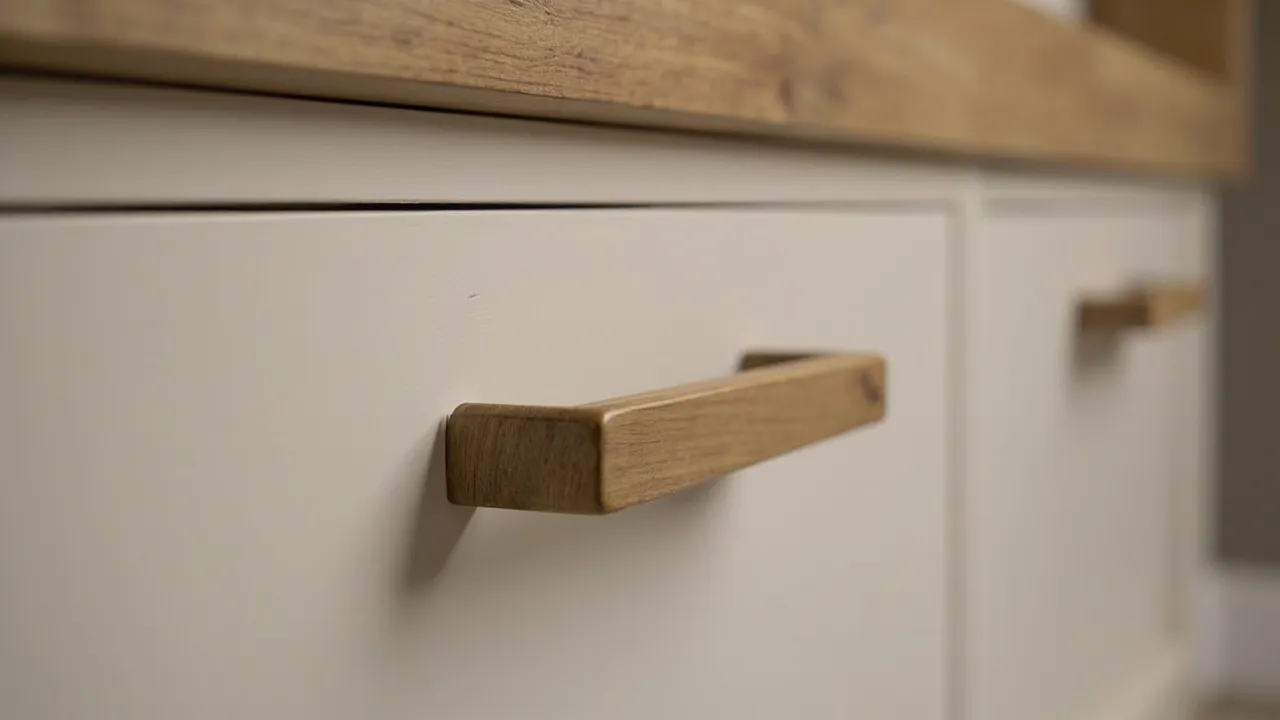
Kitchen handles are small, but you touch them every day. For a bespoke kitchen, choose a style that suits the house, a size in proportion to each door or drawer, a finish that ages well, and a position that falls naturally to hand.
In our workshop and showroom at Crossley Mills in Honley, handles are one of the last things people decide and one of the first things they notice. Many of the kitchens we make go into Yorkshire stone terraces, farmhouses and mill cottages, where the right handle can tie a new kitchen back to an old house. This guide covers how we help clients choose and fit them.
Key takeaways
- Match the handle to the period of the house and the door style, not to a passing fashion.
- Cup handles suit drawers, knobs suit small doors, and bar pulls suit tall doors and wide pan drawers.
- Finishes that age, such as unlacquered metal or oiled timber, wear in rather than wear out.
- We don't sell handles as products: we help you choose them and fit them as part of your kitchen.
What kitchen handles suit a bespoke kitchen?
There's no single right answer, but there are combinations that look settled together. These are the main types of kitchen cabinet handles we fit.
| Handle type | Best on | Character |
|---|---|---|
| Cup handles | Drawers, especially deep pan drawers | Traditional, practical, a natural partner for in-frame and Shaker kitchens |
| Knobs | Small and medium cupboard doors, small drawers | Simple and quiet; easy to grip with one finger |
| Bar or D pulls | Tall larder doors, wide drawers, appliance doors | Cleaner and more contemporary; a good grip on heavy doors |
| Turned wooden knobs | Shaker, pine and country kitchens | Warm, made to match the timber of the kitchen |
| Latches and catches | Larders and dressers | Old-fashioned charm; a positive "click" when closed |
| Handleless (finger pulls or grooves) | Plain modern doors | Minimal; needs careful detailing so doors don't get grubby at the edges |
Turned wooden knobs
Wooden knobs have a long history. The Wikipedia article on Shaker furniture notes that the Shakers avoided ornament such as metal pulls, and that drawer pulls for dressers and other furniture were made of wood. That's why a turned timber knob looks so right on a handmade Shaker kitchen. Daniel began his apprenticeship in 1995 with a Yorkshire wood-turning company, so turned details are close to our hearts. Timber knobs in the same wood as your doors are worth talking through at your consultation.
Knobs or handles on kitchen cabinets?
The knobs vs handles question usually comes down to two things: how heavy the door or drawer is, and how much grip you want.
- Knobs are fine for light doors and small drawers. They're compact, so they suit busy rows of small doors on a dresser or wall cupboard.
- Handles give a full-hand grip. Heavy pan drawers and tall larder doors are easier to open with a cup handle or a bar pull.
- A mix is often best: knobs on doors, cup handles on drawers. It's a long-standing pattern on traditional kitchens and furniture, and it helps you tell drawers from doors at a glance.
If anyone in the house has stiff hands, bar pulls and cup handles are usually easier to use than small knobs. Where you can, try a sample in your own hand before deciding.
What size handles to use on kitchen cabinets?
Handle size for kitchen cabinets is about proportion rather than a fixed rule. A handle that looks right on a narrow drawer can look lost on a wide pan drawer, and too big on a small spice drawer. As a guide from the workshop:
- Wide drawers can take a longer bar, or two cup handles or knobs spaced along the front.
- Tall doors look better with a longer pull, which is also easier to pull.
- Small doors and drawers want a small knob, so the hardware doesn't dominate the timber.
- Keep one size of each type across the kitchen where you can, so the rows line up.
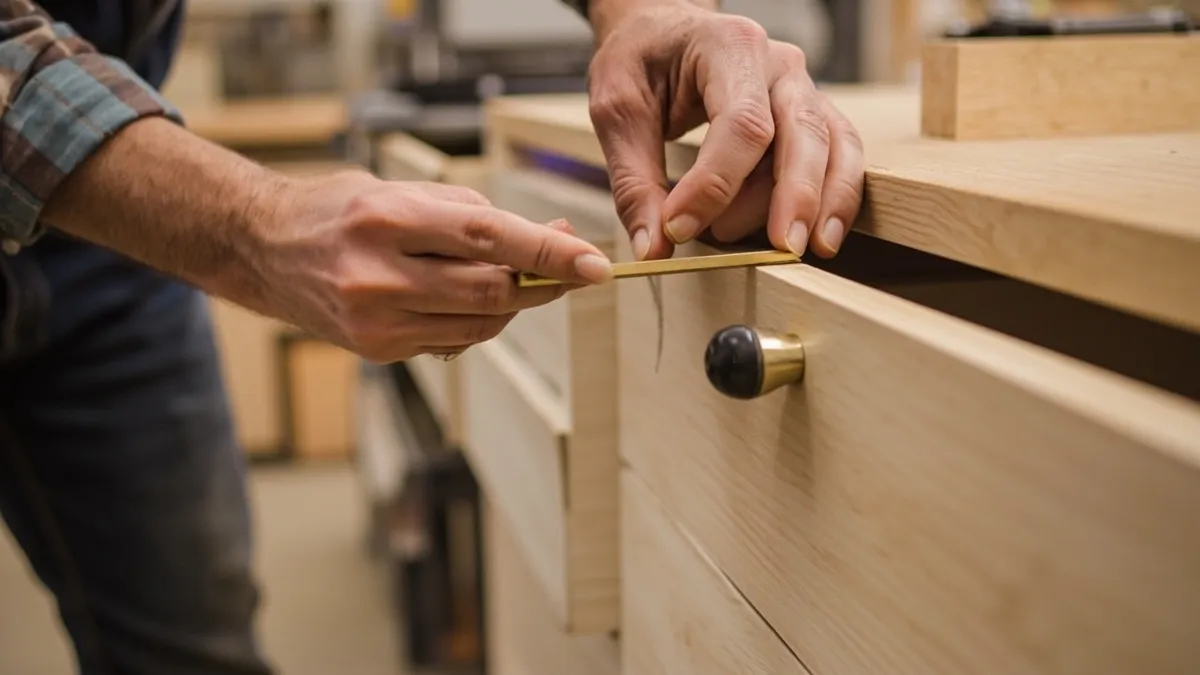
Before we fit anything, we often tape a paper or card template to a door so you can see the size in the room. It's a cheap check that saves second thoughts.
Where should handles go on kitchen doors?
Placement matters as much as the handle itself. These are the positions we use as a starting point:
- Base unit doors: near the top corner on the opening side, so you don't have to bend.
- Wall unit doors: near the bottom corner on the opening side, so you can reach.
- Drawers: centred on the drawer front, usually in the middle of the height, or a little above it on deep drawers so you're not stooping.
- Tall larders: a long pull around worktop height, where your hand naturally falls.
- In-frame doors: lined up with the rails of the door, so the handle sits in the frame rather than floating.
On a painted or in-frame kitchen, a straight line of handles along a run is what makes the whole thing look calm. We mark positions from a jig so every door matches.
Which handle finishes age well?
A bespoke solid wood kitchen should last, so the hardware should look better with age too. We avoid brand names, but we can talk about materials:
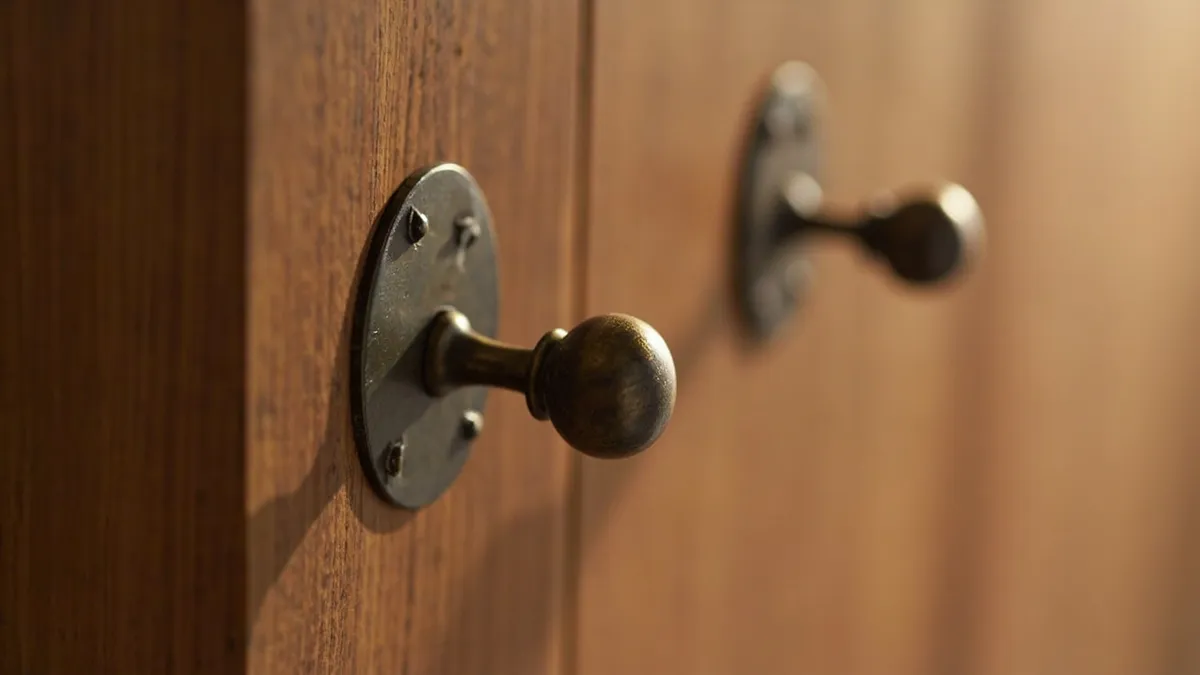
- Unlacquered brass and bronze-type finishes darken and soften with handling, which suits old houses.
- Iron and dark painted metal look right in farmhouse kitchens and with pine or oak.
- Polished and satin nickel or chrome look crisp with pale painted doors and stay bright.
- Timber knobs in oak, cherry or the same wood as the doors can be oiled along with the worktop.
Metal finishes with a plated or lacquered coating can wear through on the most-used drawer, so it's worth deciding whether you want that patina or not. Our guide to painted kitchen colours may help you pair the two.
How do you match kitchen handles to a period Yorkshire house?
Older Yorkshire houses give useful clues. Look at the doors, the window furniture and any original dresser or cupboard. As a loose guide, simple turned knobs and latches tend to suit cottages and farmhouses, cup handles and plain knobs sit well in Victorian terraces, and slimmer pulls suit a later or more modern extension. Our article on Victorian and Georgian kitchen ideas covers the wider look. If you're unsure, a restrained choice is rarely wrong: in a handmade kitchen, the timber and joinery should do the talking.
Can I change my kitchen cupboard handles?
Usually yes. Changing kitchen handles is one of the simplest ways to refresh a kitchen. The catch is the old fixing holes: a new handle with different hole centres will leave marks to fill. On solid timber doors we can fill, sand and refinish them; on painted doors they need filling and repainting. If you're thinking of a wider refresh, our team also does paint stripping and restoration.
Rule of thumb from the workshop: what we'd do
When we fit kitchen handles on a new kitchen, we follow a few habits from cabinet-making practice:
- Decide handles before the doors are finished. Then holes can be drilled before the final coats of paint or oil.
- Drill from the face, with a backing block. This avoids splitting out the back of a solid timber door.
- Use a jig for every hole. A handle that's a few millimetres out is the first thing the eye picks up along a run.
- Allow for door thickness. Solid timber doors can be thicker than many off-the-shelf doors, so check the fixing bolts are the right length.
- Try before you fix. We hold a sample in place on a real door, in the real room, before drilling.
What to bring to your showroom visit
- Photos of your existing doors, windows and any original fittings in the house
- Pictures of handles or kitchens you like
- A note of who uses the kitchen, including anyone with stiff or sore hands
- Any handles you already own and would like to reuse
Choose your handles with us
Daniel Fitzpatrick, our owner and master craftsman, offers a free consultation and will help you choose kitchen handles that suit your house, your doors and the way you cook. Book a showroom visit at Crossley Mills, Honley (by appointment) to see doors, joints and finishes up close, and browse our Shaker kitchens made in Yorkshire.
Call 01484 666 333, email info@handmadekitchensyorkshire.co.uk or use our contact page. You're welcome to visit the workshop and see your kitchen being made.
Frequently asked questions
Do you sell kitchen handles?
No. We don't sell handles as products. We help you choose a style, size and finish that suits your kitchen, and we fit the handles as part of the project. If you've already found handles you love, bring them along and we'll plan the doors and drawers around them.
Are cup handles only for drawers?
Mostly. Cup handles are made to be pulled from below, which suits drawers. On doors they can look odd and are awkward to grip sideways. A common pairing is cup handles on drawers and knobs on doors, which also helps you tell drawers and cupboards apart at a glance.
Can I have wooden knobs to match my kitchen?
Often, yes. Wooden knobs suit Shaker, pine and country kitchens, and knobs in the same timber as your doors can be finished along with the rest of the kitchen. We make every kitchen by hand in our Honley workshop, and Daniel will talk through matching timber knobs at your free consultation.
Is a handleless kitchen practical?
It can be, but it needs careful design. Without handles, fingers touch the door edges, so painted edges can mark. Finger grooves cut into the timber or a recessed rail are often more practical than push-to-open catches in a busy family kitchen. We'll talk through the options at your consultation.