
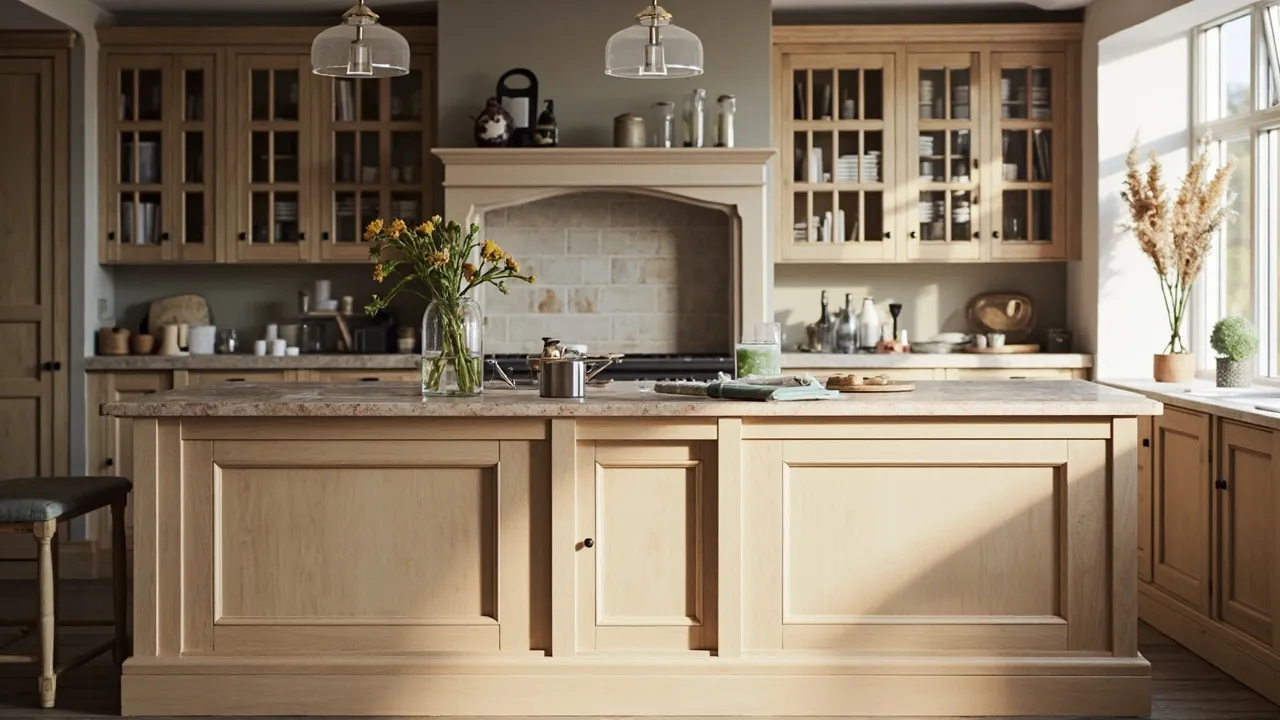
An in frame kitchen has cabinet doors and drawer fronts set within a solid timber surround, creating a traditional framed appearance and a strong fixing point for hinges.
It is easy to mistake “in-frame” for a door style. The term actually describes how the cabinet is made: an Oak & Pine by Design face frame is fixed to the cabinet front, and each door hangs within that border. Shaker refers to the door’s five-piece form, with a recessed central panel. The two choices can be combined, so a Shaker door is often used in an in frame kitchen.
This distinction matters because the frame affects appearance, access and longevity. Inset doors need consistently narrow reveals, while well-made timber can move seasonally without compromising the whole cabinet.
How a face frame differs from a frameless European carcass
In a framed kitchen, vertical stiles and horizontal rails form a wooden surround around the cabinet opening. The doors and drawer fronts sit inside it, and the hinges are fixed to the frame.
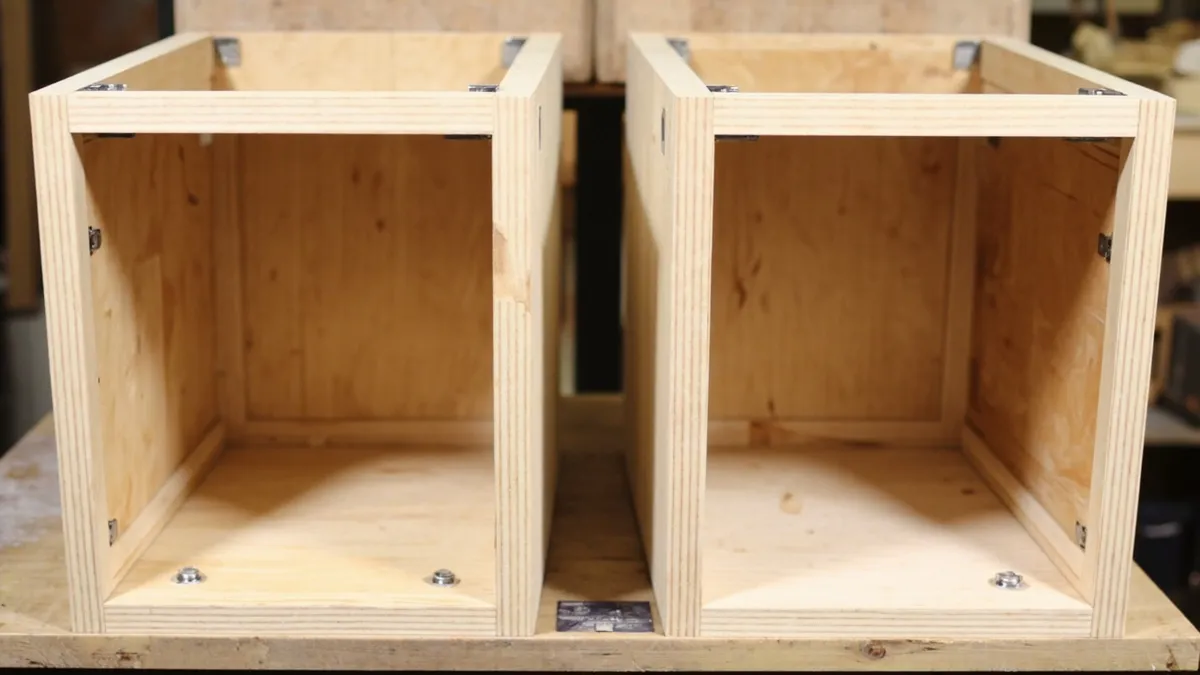
A frameless European carcass has no front border. Its doors attach directly to the cabinet sides, which preserves a little more internal width and supports straightforward hinge adjustment.
Framed construction is more demanding because the frame reduces the opening slightly and leaves less room for tolerance errors. A frameless design can suit a narrow kitchen where every centimetre counts, while a face frame better complements a period or traditional interior.
Why timber movement decides whether an in frame kitchen lasts
The durability of an in frame kitchen depends on careful timber selection, suitable moisture levels and accurate fitting. Oak, beech, maple and mahogany expand and contract as humidity changes, so close-fitting doors need room to move.
TRADA’s WIS 4-14 guidance on moisture in timber places in-service moisture content at 9–13% for internal joinery in rooms kept at 12–21°C. European oak is classed as a high-movement timber, making controlled drying and acclimatisation especially important.
BS EN 942 calls for suitable timber selection and specifies stable material where narrow tolerances are necessary. Boards should be prepared, machined and allowed to settle in their final environment before the doors are hung. The same principle applies to solid oak and engineered alternatives, although MDF may be used for components where its consistency is advantageous.
Oak & Pine by Design follows a practical rule at its Honley workshop: the carcass should acclimatise to the room for at least a fortnight before doors are fitted. Its Guild of Master Craftsmen accreditation supports an established approach to bespoke woodworking, while moisture measurement helps reduce avoidable movement.
Who in-frame cabinetry suits, and where bespoke kitchens and furniture fit
An in frame kitchen is particularly suitable for homeowners who value traditional character, repairable cabinetry and a long service life. It can also support panelled rooms, period properties and wider design schemes.
Oak & Pine by Design builds solid timber carcasses and face frames for bespoke kitchens in oak, as well as coordinated furniture such as bookshelves, panelling and built-in seating. This relationship between bespoke kitchens and furniture, woodworking and room-specific joinery allows the same design language to continue beyond the kitchen.
If you want to assess the construction before ordering, book a showroom visit to examine a face frame, compare samples and discuss suitable timber and layouts.
Common questions about in frame kitchen
What does an in-frame kitchen mean?
An in-frame kitchen has doors and drawer fronts fitted inside a solid timber surround rather than over the cabinet face. The frame strengthens the front, conceals unfinished edges and provides a solid hinge fixing.
Are inframe kitchens worth it?
Inframe kitchens are worth considering for buyers who prioritise traditional appearance, durable joinery and future repairs. The frame demands close tolerances and skilled fitting, and the design uses slightly less internal space than frameless cabinetry.
What's the difference between inframe and shaker?
In-frame describes the cabinet construction, while Shaker describes the door design. A Shaker door can be mounted inside a timber frame, so an in frame kitchen may combine both features.
Sources
- Luxury Kitchens & Fitted Furniture in France
- Why Choose An In-Frame Kitchen?
- What Is An In-Frame Kitchen?
- Frameless vs Framed Kitchens: What's the Difference?
- Frameless vs Framed Kitchens: What's the Difference?
See the work for yourself
Photographs only go so far with timber. The grain, the weight of a door and the feel of a drawer running true are things you have to handle. Every kitchen we make is built by hand in our Honley workshop, and you are welcome to come and see one being put together.
To talk through your kitchen or arrange a visit, book a showroom visit, call 01484 666 333 or email info@handmadekitchensyorkshire.co.uk.