Sustainably Sourced Timber UK: A Buyer's Guide
Sustainably sourced timber UK supply is real, certified, and traceable.
FSC and PEFC schemes confirm forests are replanted to replace what they are harvested, and any timber placed on the GB market since 1 January 2021 must pass UK Timber Regulation due diligence. For a homeowner specifying a bespoke kitchen, this means an FSC-certified British oak or reclaimed pine route is the cleanest choice available in the United Kingdom today.
Quick answer: sustainably sourced timber UK
Yes, sustainably sourced timber UK supply is real and well documented: FSC and PEFC certification schemes confirm forests are managed to replace what they harvest, and any timber placed on the GB market since 1 January 2021 needs documented due diligence under the UK Timber Regulation. For homeowners specifying a bespoke kitchen, this means an FSC-certified British oak or reclaimed pine route is the cleanest choice available in the United Kingdom today.
Can timber be sustainably sourced?
Yes.
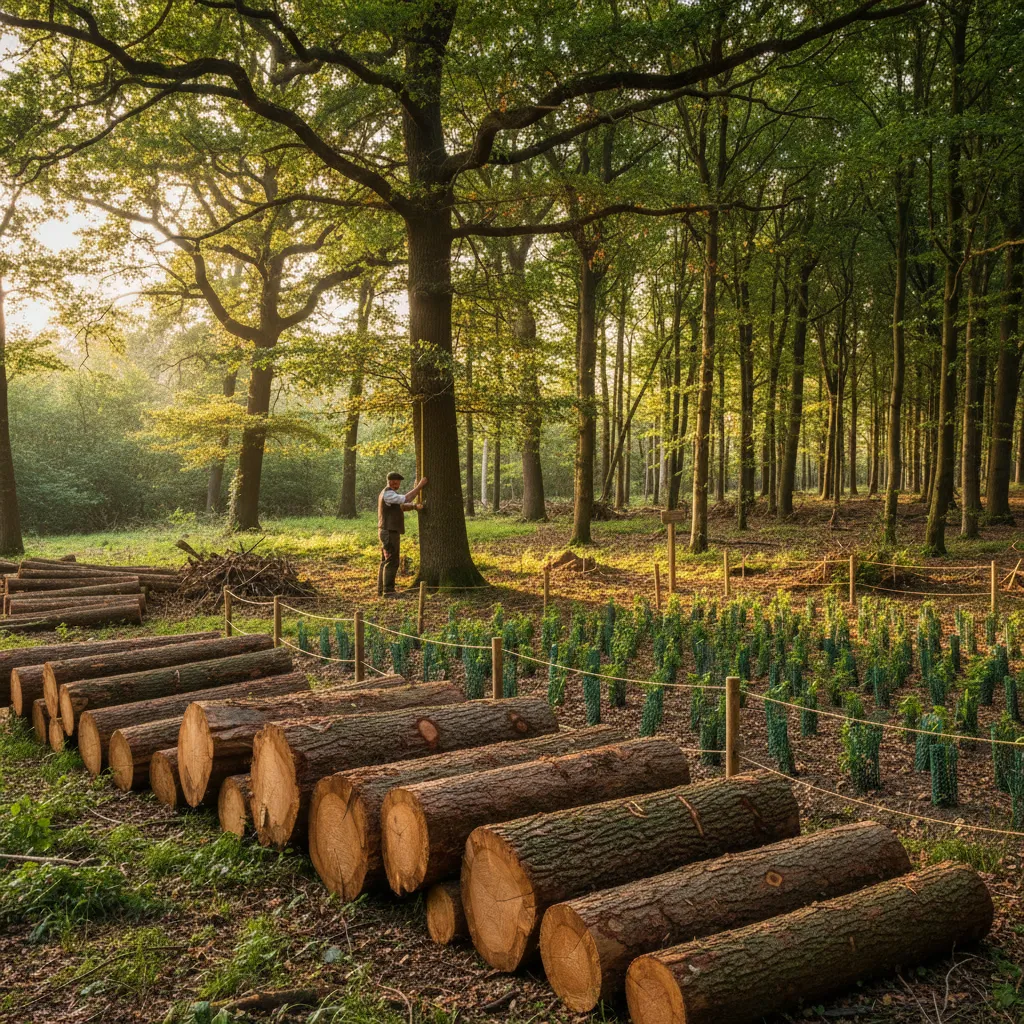
Timber is a renewable material when forests are managed to replace what they harvest. In the UK, the two routes that prove it are FSC and PEFC certification, both anchored to the UK Woodland Assurance Standard. Legality sits on a separate line: under the UK Timber Regulation, any timber placed on the GB market since 1 January 2021 needs documented due diligence or it is unlawful to trade.
What type of timber is most sustainable?
The most sustainable timber is whatever is both locally grown and certified. In the UK that means British oak, larch, Douglas fir, and beech, because short haulage keeps transport CO2 low and these species regrow reliably in managed woodland. FSC or PEFC hardwoods run a close second. Tropical species rarely do, unless the timber is reclaimed.
What are the UK's top sustainable brands?
On the supply side the names most often cited are Timbersource (FSC and PEFC stock, UKTR-ready since the regulation began), W.L. West & Sons (West Sussex sawmill, trading since 1869), and Whitney Sawmills (Herefordshire, harvesting from Duchy of Cornwall woodlands with a written replanting commitment). On the workshop side, Oak & Pine by Design builds its handmade kitchens and furniture in Yorkshire from certified stock.
What is the most environmentally friendly wood?
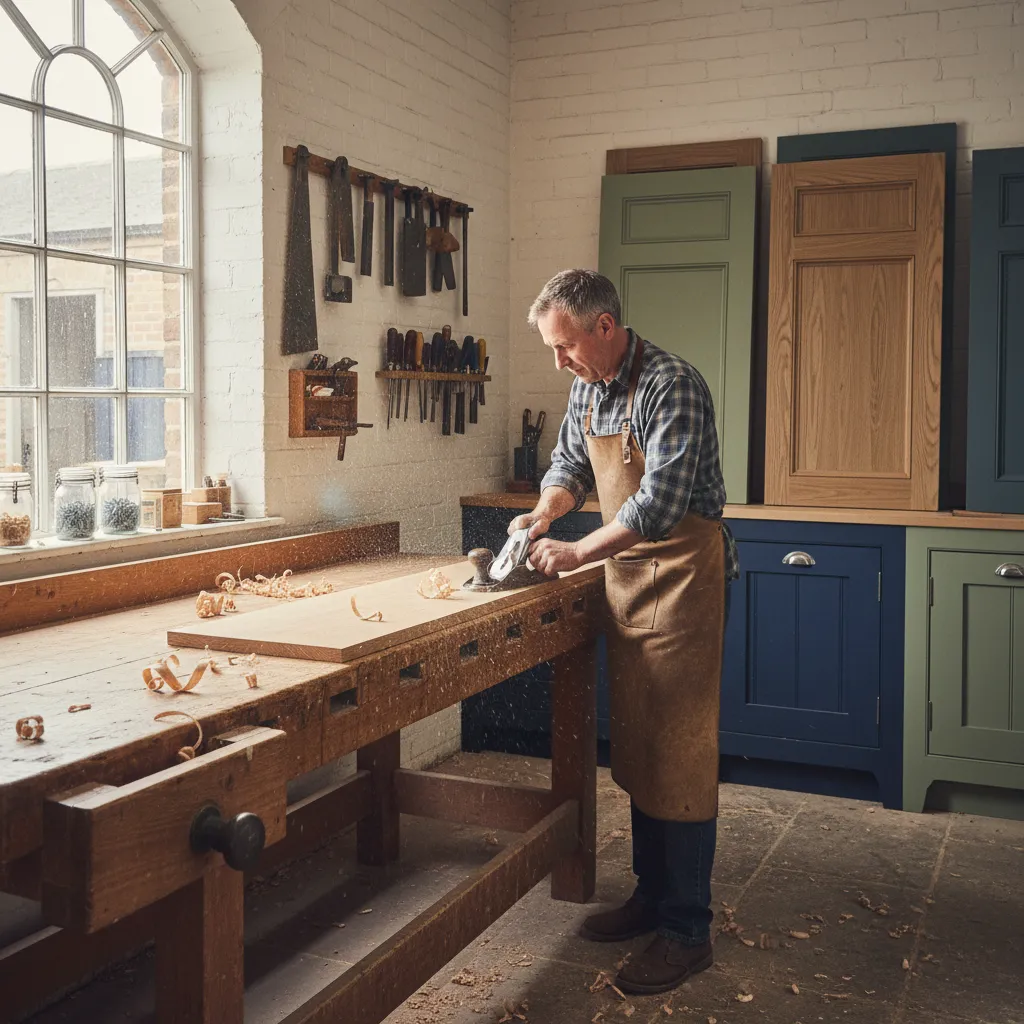
Reclaimed timber is the most environmentally friendly wood, because no new tree is felled and no kiln-drying energy is spent. When new material is needed, homegrown FSC-certified British oak or larch scores best on embodied carbon, transport distance, and end-of-life re-use.
Timber certification, chain of custody and UK legality explained
FSC and PEFC: what these labels actually guarantee
Two certification schemes dominate UK timber supply: FSC (Forest Stewardship Council) and PEFC (Programme for the Endorsement of Forest Certification). Both confirm that forests are managed to a written standard, limiting clear-felling acreage, protecting rare species, and requiring replanting after harvest.
FSC is generally the stricter scheme, with firmer rules on indigenous rights and controversial sources. PEFC is a global umbrella that endorses national standards such as the GFS in England and the GFS in Ireland. A board carrying either label from a UK sawmill should meet the UK Forestry Standard, but the paperwork trail differs.
What the label does not guarantee: that the timber is local, that transport carried zero carbon cost, or that the source forest was pristine. Treat certification as a baseline filter, not a final answer.
Chain of custody, UKTR due diligence and the trade-offs buyers overlook
Chain of custody follows every step from forest to finished board, with each handler invoicing the certified volume separately. A supplier selling FSC-certified oak must hold a valid chain-of-custody certificate themselves; the label cannot travel alone. UKTR is the legal layer above it: every business placing timber on the UK market must run due diligence, confirming legal harvest, species, and origin.
The trade-off most buyers miss: certification adds roughly 5 to 15 per cent to material cost, and a small workshop without its own chain-of-custody approval cannot legally re-sell certified timber even when the board is certified. Ask any workshop for its certificate number and the scope of approval before specifying FSC or PEFC stock for a project.
Common questions about sustainably sourced timber UK
Can timber be sustainably sourced?
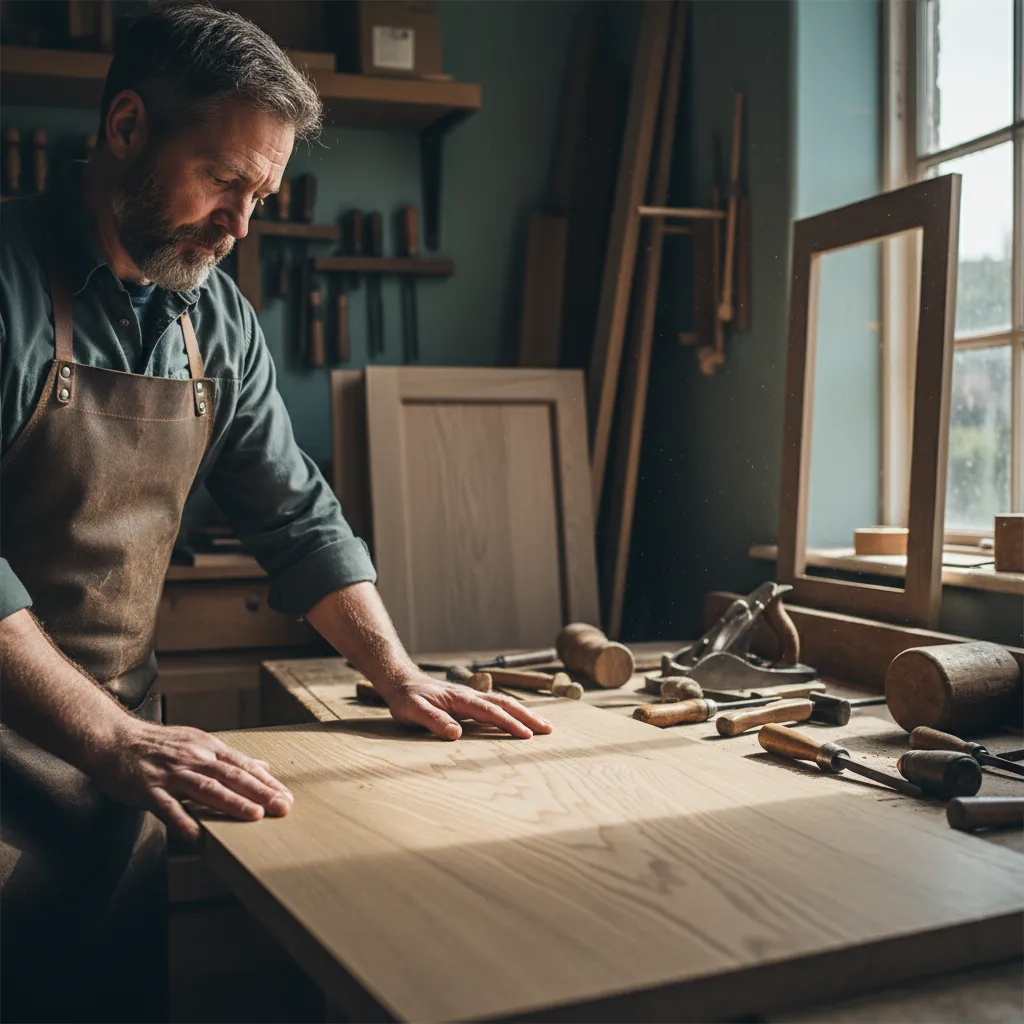
Yes. Timber can be sustainably sourced when forests replace every tree felled and the chain of custody is tracked from woodland to workshop. In the United Kingdom, FSC and PEFC carry weight, both operating to the UK Woodland Assurance Standard. Oak & Pine by Design only accepts FSC-certified stock, so every board in the Huddersfield workshop traces back to a documented forest.
What type of timber is most sustainable?
British-grown oak, larch, and Douglas fir are the strongest choices for UK buyers. They regenerate within decades rather than centuries, travel short distances to Yorkshire sawmills, and the dense grain holds CO2 for the working life of the finished piece. Reclaimed pine scores higher still on embodied carbon, since no new tree is felled at all.
What are the UK's top sustainable brands?
Independent Yorkshire makers and long-established British sawmills lead the field. Oak & Pine by Design in Huddersfield, Timbersource, W.L. West & Sons in West Sussex, and Whitney Sawmills in Herefordshire all publish FSC chain-of-custody evidence and have held UKTR compliance for years. Choosing a workshop that names its forest source, rather than a generic merchant, is the clearest signal you can follow.
What is the most environmentally friendly wood?
Reclaimed timber is the most environmentally friendly wood, because it skips the felling stage. Locally grown FSC-certified oak is the next best option for new commissions, since short transport distances cut emissions and British regrowth is monitored. Tropical hardwoods carry higher deforestation risk and warrant closer scrutiny before purchase.
Specifying your project and speaking with the workshop
When a bespoke service page is the right next step
A bespoke service page is the right next step once you have moved past browsing inspiration and are ready to discuss layout, species, and budget for a specific room. It suits homeowners who already know they want handmade joinery rather than flat-pack cabinetry, and who want to see the workshop's actual process before booking a call. The bespoke kitchens service page sets out what each route includes, typical timelines, and the timber ranges the Yorkshire workshop works in day to day, from painted and shaker styles to solid oak, pine, beech, mahogany, and maple.
For Oak & Pine by Design the page makes clear how a single workshop handles every project from drawing to installation, with founder Daniel Fitzpatrick overseeing twenty-five years of master craftsmanship. It also names the Guild of Master Craftsmen accreditation, a written credential rather than a marketing claim. Buyers comparing solid wood kitchen units against veneered alternatives will find the page useful for understanding why traditional joinery and hand-finishing change the specification conversation entirely.
How to begin a conversation with the workshop
Start by listing the room, the rough dimensions, and one or two species you want to handle in the finished piece. Bring photographs and rough sketches; the workshop responds better to a clear shape than to a polished mood board. Ask which sustainably sourced timber UK ranges the workshop covers for your dates, and whether FSC-certified British oak or reclaimed pine is in stock.
Phone the workshop on 01484 666 333, email info@handmadekitchensyorkshire.co.uk, or use the contact page to send measurements and a brief. Expect a reply within two working days from a person, not a chatbot ticket.
Sources
- Responsible Timber Providers Across Britain | Timbersource
- Five Top Timber Choices for an Eco-Friendly Build | W.L West & Sons
- Mindful Forestry at Whitney Sawmills
- Choosing the Right Timber Certification for Greener Building | Logic
- Certification of Our Forests and Woodlands | Natural Resources Wales
- Friends of the Earth Guide to Better Wood Choices
- Timber and Forest Products | Forest Stewardship Council
- Understanding FSC: An Overview | Forest Stewardship Council UK