
Quick answer: how to tell if a bespoke kitchen is actually handmade
To tell if a bespoke kitchen is actually handmade, inspect the build, not the brochure: visible dovetail joints on solid drawer boxes, mortise and tenon frames, hand-applied paint with real depth, and cabinets cut to your room rather than a standard grid.
Anything else is fitted, not built.
What handmade looks like in practice
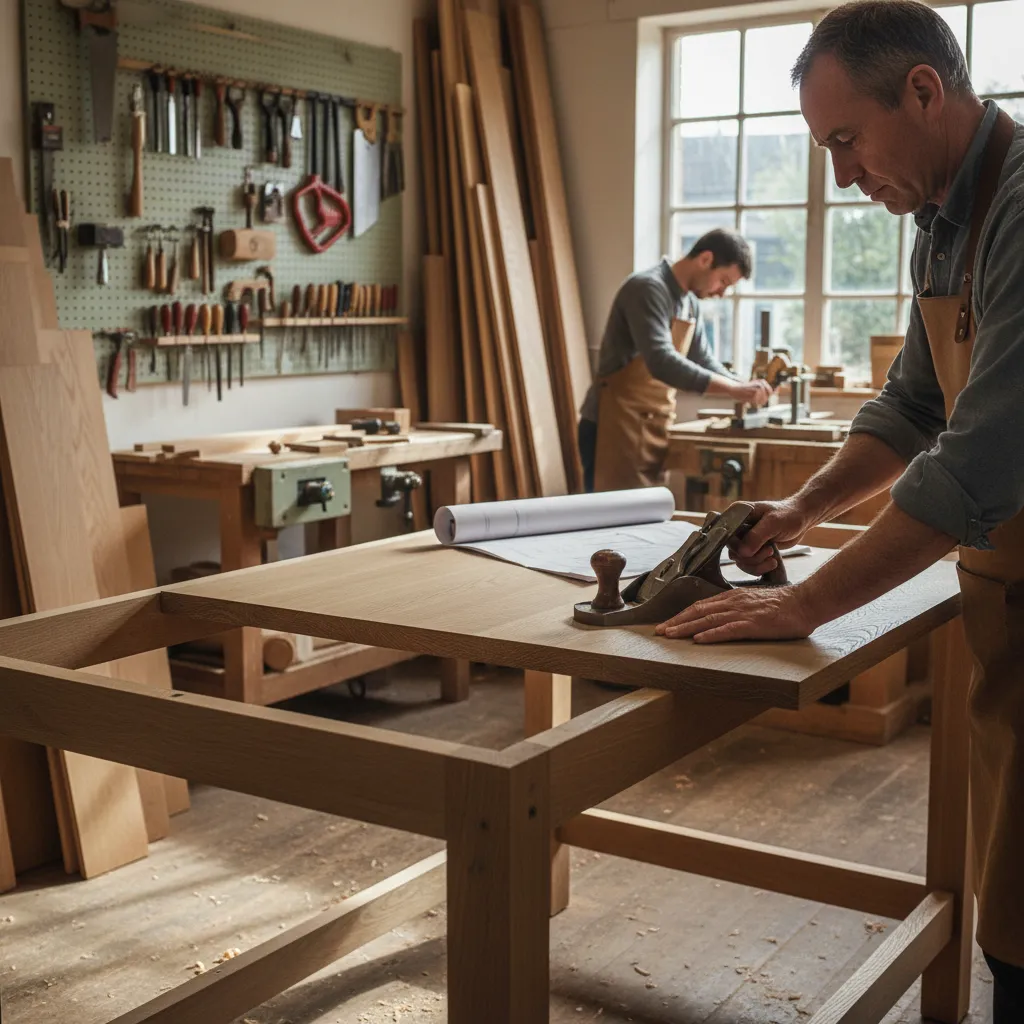
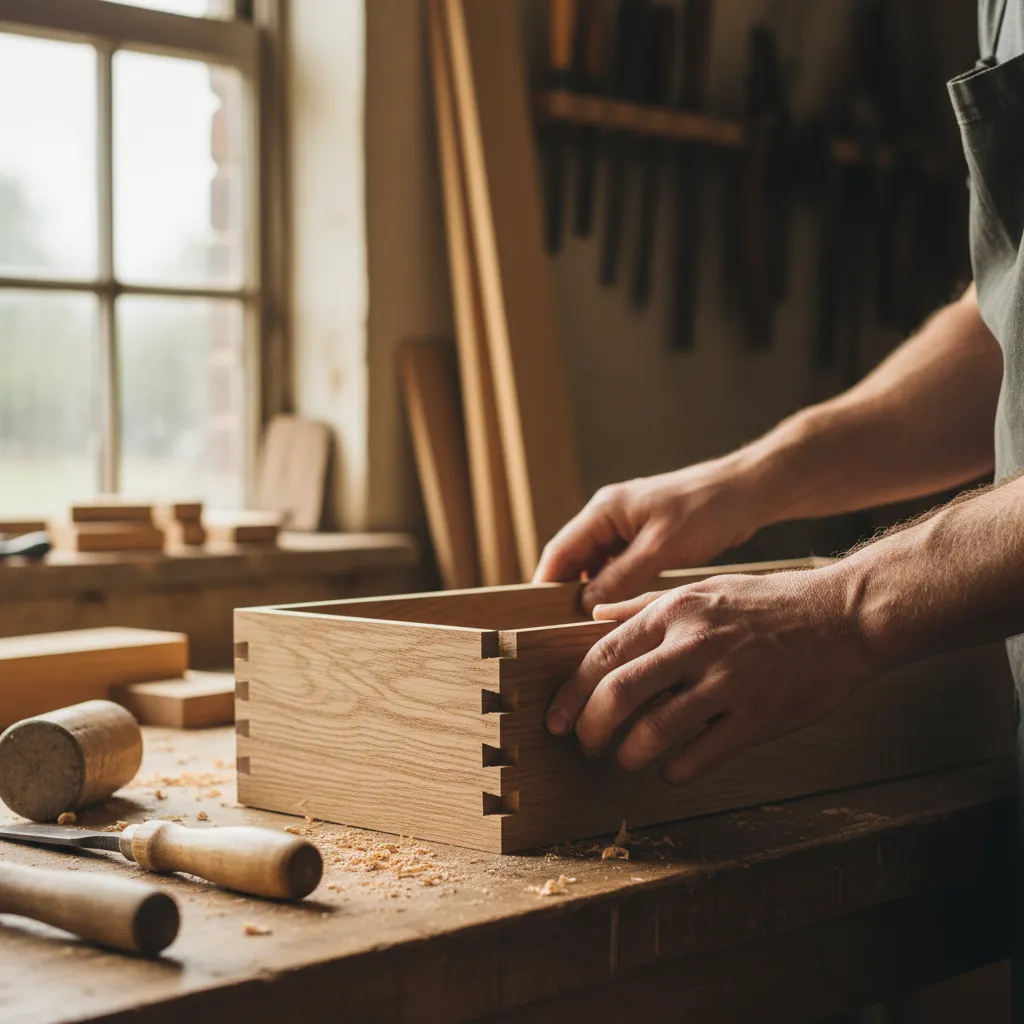
A handmade kitchen is built from raw timber in a workshop, not bolted together from pre-cut parts on site. Open a drawer and the joinery should be tight, visible, and traditionally cut, not stapled or glued from chipboard. At Oak & Pine by Design, every drawer box leaves the bench with hand-sawn dovetails in solid oak, pine, or beech, never in MDF wrapped in a timber-look foil.
Run your hand across the paintwork. Hand-applied finishes show subtle brush movement and layered colour; sprayed factory finishes feel uniformly flat. Doors and drawers should close with a weighted, solid feel, a small detail that separates hand-built cabinets from flat-pack assembly.
Check the materials list. Genuine handmade work uses solid timber for frames, drawer boxes, and shaker kitchen doors, often paired with quality plywood carcasses. MDF and melamine inside a "handmade" cabinet is a warning sign, and a very common one in painted ranges that arrive flat-packed from a third-party factory.
Three quick checks before you commission
- Ask to see the workshop and watch a cabinet being built from raw boards.
- Ask whether drawer boxes are solid wood with hand-cut dovetails or factory-made.
- Ask if the carcasses are cut to your room dimensions or to standard sizes with filler panels.
These three questions expose most of the shortcuts. A maker who builds from scratch answers them openly; a reseller deflects. For a fuller breakdown, read on.
What makes a kitchen bespoke, and who builds one well
What makes a kitchen bespoke
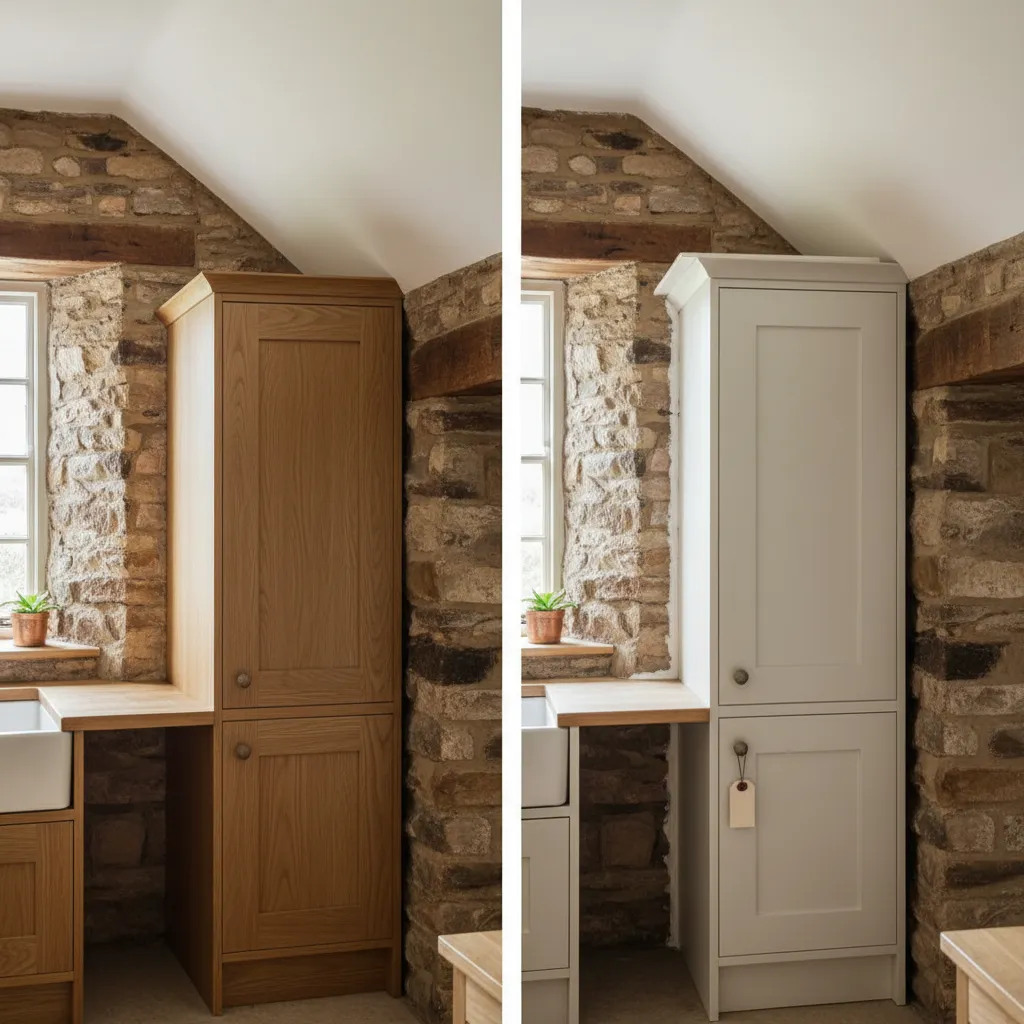
A kitchen is bespoke when every cabinet, panel, and fitting is designed and built to the exact dimensions of one room and one set of habits, not adapted from a stock range. True bespoke work starts with a survey of the actual space, including quirks like sloping ceilings, alcove recesses, and uneven walls, then produces cabinets in non-standard widths, heights, and depths to suit them. The standard grid of 300mm, 400mm, 500mm, and 600mm is abandoned wherever the room demands it, which is why a truly bespoke wooden kitchen has no filler strips down the side of the larder.
Who makes the best bespoke kitchens
The best bespoke kitchens come from a single workshop where one maker, or a small team, handles design, joinery, and finishing from raw timber through to installation. Oak & Pine by Design, a Yorkshire workshop run by master craftsman Daniel Fitzpatrick with over 25 years of experience, builds every range in-house using traditional joinery and sustainably sourced timber, and holds Guild of Master Craftsmen accreditation. Look for makers who invite you to visit the workshop, send joinery samples on request, and confirm the lead time for your specific design rather than quoting a catalogue number.
- Signs of genuine craft: drawer boxes hewn from solid planks with hand-sawn dovetails, frames joined by traditional mortise and tenon work, and paintwork laid on by brush in layers you can see and feel.
- Red flags: filler panels masking poor fit, fixed colour lists, or cabinet sizes in round numbers that ignore the room.
Bespoke versus made-to-measure, and how mass production hides inside both
Bespoke means built to your dimensions; made-to-measure means chosen from a modular grid and resized within factory limits. Made-to-measure works for straightforward rooms but fails on period properties, where ceiling heights shift by 40mm across one wall and chimney breasts eat into standard carcases. A 2025 Houzz UK study found that 62% of homeowners renovating period homes needed at least one non-standard cabinet width, which is exactly where modular ranges start adding filler panels to disguise the gap.
The most common disguise is the "semi-bespoke" label. Behind it sits a CNC-cut carcass from a third-party factory, sprayed and wrapped in a foil that imitates an oak kitchen or painted shaker style kitchen. The giveaway is in the back: pre-drilled service holes that don't line up with your services, and drawer boxes that weigh less than the timber they claim to be made from.
Questions to ask, colours that last, and what's trending in 2026
What to ask any kitchen maker before you sign
A bespoke kitchen is only as good as the workshop behind it. Ask where the cabinets are built, who builds them, and whether joints are cut by hand or by CNC. Request to see a drawer box pulled from current production: hand-cut dovetails, full mortise and tenon frames, and solid timber edges tell you more than any brochure. Ask for the names of the joiners on your job, the timber supplier, and the lead time from deposit to install. If the answers stay vague, the work probably will too.
What colour kitchen won't date
A painted shaker kitchen in a soft, muted tone ages better than any high-gloss trend. Colours drawn from nature, including warm greys, stone whites, sage, and the soft blues and greens found in Yorkshire stone cottages, sit comfortably for twenty years. The cabinetry matters more than the shade: solid timber painted kitchen units, hand-painted in the workshop and repaintable on site, outlast any laminate finish when styles shift. Choose the colour you can live with across two redecorations, not the one trending on social media this month.
What is a shaker kitchen and why it keeps returning
A shaker kitchen is a simple, five-piece door with a flat centre panel and clean square frames, named after the Shaker communities whose furniture pared back every unnecessary moulding. The modern shaker kitchen keeps that honesty and pairs it with current worktops and appliances, which is why the style slips between traditional and contemporary homes without looking out of place. In an in frame kitchen, the door sits inside the cabinet frame rather than against it, a construction detail that adds rigidity and is a quiet signal of joinery-led work.
What is the new kitchen trend for 2026
The 2026 trend points back towards honest materials and quiet detailing: shaker style kitchen doors in painted oak, visible hand-finishing, and warm timber islands paired with stone worktops. Buyers are tiring of handle-less gloss units that mark at the first fingerprint. What is coming through is quieter, heavier, and built to outlive the photograph.
Next step: bring your ideas to a Yorkshire workshop
Book a design conversation at the workshop
Skip the showroom pitch and book a design conversation at the Oak & Pine workshop near Huddersfield. Daniel Fitzpatrick handles every enquiry personally, from the first sketch to the final hand-finish, so you talk directly to the person shaping your cabinets. Bring your room measurements, a few reference images, and your shortlist of must-haves; expect a working drawing and a timber sample in the room before you leave.
The workshop handles oak, pine, beech, mahogany, maple, painted finishes, reclaimed pine, and shaker styles under one roof, which means your doors, drawer boxes, and carcasses are built in the same room by the same hands. Call 01484 666 333 or email info@handmadekitchensyorkshire.co.uk to fix a visit, or send a message through the contact page with your postcode and a preferred time.
Trusted answers to the questions buyers ask most
What makes a kitchen bespoke? A bespoke kitchen is designed and built from scratch to your exact space, storage needs, and lifestyle, with every dimension, material, and finish chosen for that room alone.
Who makes the best bespoke kitchens? The best makers are those who build your cabinets from raw timber, use traditional joinery, and offer a single point of contact from drawing to installation.
What colour kitchen won't date? Soft, muted shades such as putty, sage, and warm white age well because they sit close to natural timber and stone tones that recur in period and modern homes.
What is the new kitchen trend for 2026? Buyers are moving back to honest materials and quiet palettes, pairing painted shaker fronts with solid oak worktops and visible hand-finishing rather than high-gloss composites.
Pick one question, write down your answer in a sentence, and bring it to the workshop on 01484 666 333; that single line often saves a full design round.
Sources
- Choosing a Custom-Built Kitchen for Your Home: The Bespoke Handmade Route
- How a True Bespoke Kitchen Comes Together, From Raw Boards to Finished Room
- Custom-Made Compared with Hand-Built Kitchens: Sorting the Real Difference
- Tailored versus Hand-Crafted Kitchens: A Question of Skill and Worth
- The Quiet Craft of Handmade Kitchens, by Mimar
- A Walk Through the Craft of Hand-Painted, Made-to-Order Kitchens: Inspiration and Method
- Defining a Bespoke Kitchen, in Plain Words
- Considering a Bespoke Kitchen? Weighing the Real Value, by Roundhouse