Handmade kitchens: what the label actually means
Quick answer: handmade kitchens
A handmade kitchen is built one cabinet at a time in a joinery workshop, sized to the room rather than chosen from a catalogue of carcasses, and finished with traditional joinery such as dovetail joints and mortise and tenon frames.
That single difference, made-to-measure cabinets built by a joiner from solid timber, is what separates a workshop kitchen from a flat-pack one with the word "handmade" on the brochure.
Genuine handmade kitchens in the UK are made by named joiners using solid timber, dovetail drawers and in-frame cabinetry, then hand-painted or oiled to suit the room. Marketing language is not regulated, so the construction details on the quote sheet are the only reliable proof.
What the word actually means at the bench
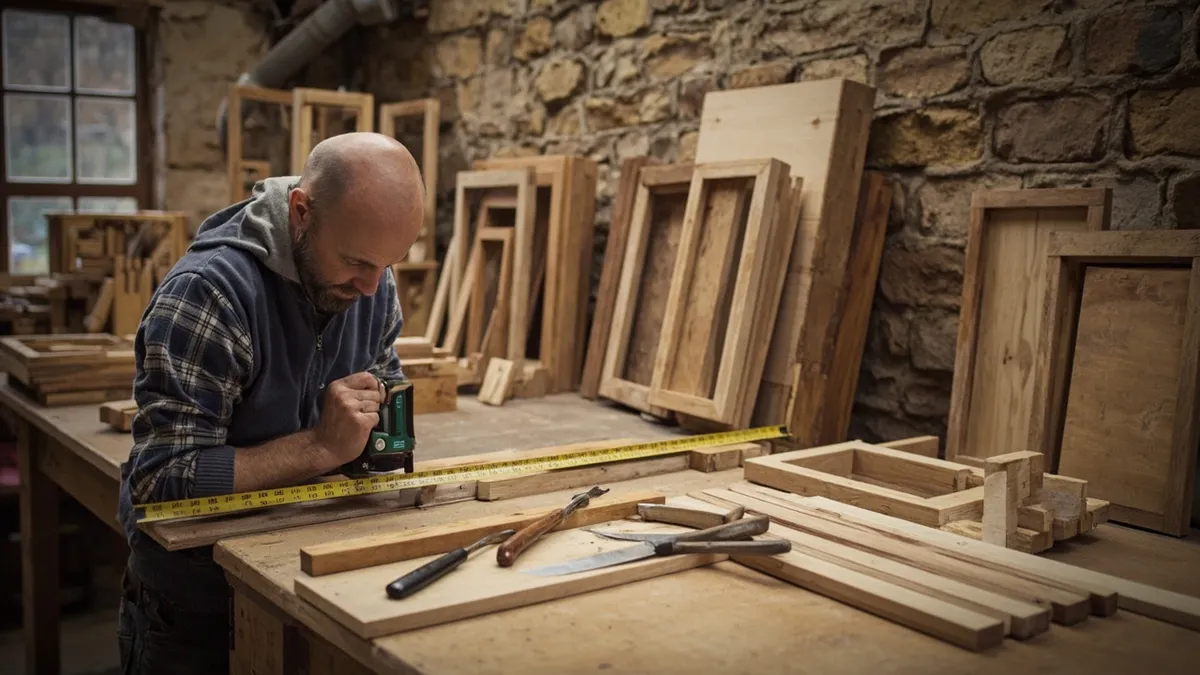
In a real workshop, the work is slow and deliberate. The maker measures the room, draws the units to suit the walls, the ceiling height and the uneven corners that older Yorkshire houses always have, then cuts solid timber for the frames, doors and drawer fronts. Carcasses go together with traditional joinery: mortise and tenon on the frames, dovetail joints on the drawer boxes, and in-frame cabinet construction where the door sits inside a solid timber face frame. Worktops are templated after the units are installed, not before, so a quartz or solid oak surface can be cut to the exact run.
Why the label gets used loosely
The word "handmade" is not protected in UK law, so a kitchen assembled from imported flat-pack carcasses in a UK warehouse can carry the label without consequence. A genuinely handmade kitchen shows its origins in construction: solid timber, not veneered MDF; dovetailed drawer boxes; doors hand-sanded and hand-finished; cabinetry sized to the room, not stretched to fill it.
How to tell a genuinely handmade kitchen from one only marketed as one
A genuine workshop kitchen is built one cabinet at a time, in timber, by a joiner. A kitchen merely marketed as handmade is usually a flat-pack carcass dressed with a solid timber face and sold above its construction. The gap between them is something you can check on a quote sheet or with a torch in a showroom.
Six things to check in a showroom or on a quote
Ask to see a drawer box corner. A real dovetail joint interlocks with no visible fixings; a stapled or dowelled corner comes apart when pulled. Ask whether cabinet sizes are chosen from a standard range or measured to your room. A hand-built kitchen fits an odd wall, a low ceiling in a Holmfirth cottage, or a chimney breast in a Wakefield terrace without filler panels hiding the gap.
Lift a door. Solid Shaker or in-frame doors feel heavy and close quietly; hollow-core doors feel light and ring when tapped. Check the back of a cabinet: a proper carcass has a solid back rebated into the sides, not a thin sheet pinned on. Ask who applies the hand-painted topcoat, and how many coats. Ask who fits the kitchen, and whether the same workshop that builds it sends the fitter.
Questions worth asking any maker, including us
Ask for the name of the person who will cut your doors. Ask what timber the carcasses are made from, not just the doors. Ask whether the cabinets can be taken apart and reassembled if you ever move house. Ask to see a kitchen being built in the workshop, not just a finished room. You can book a showroom visit to the Honley workshop and watch the work in progress.
Why it is built this way, and what the extra work buys you
How a bespoke kitchen handles an old Yorkshire house
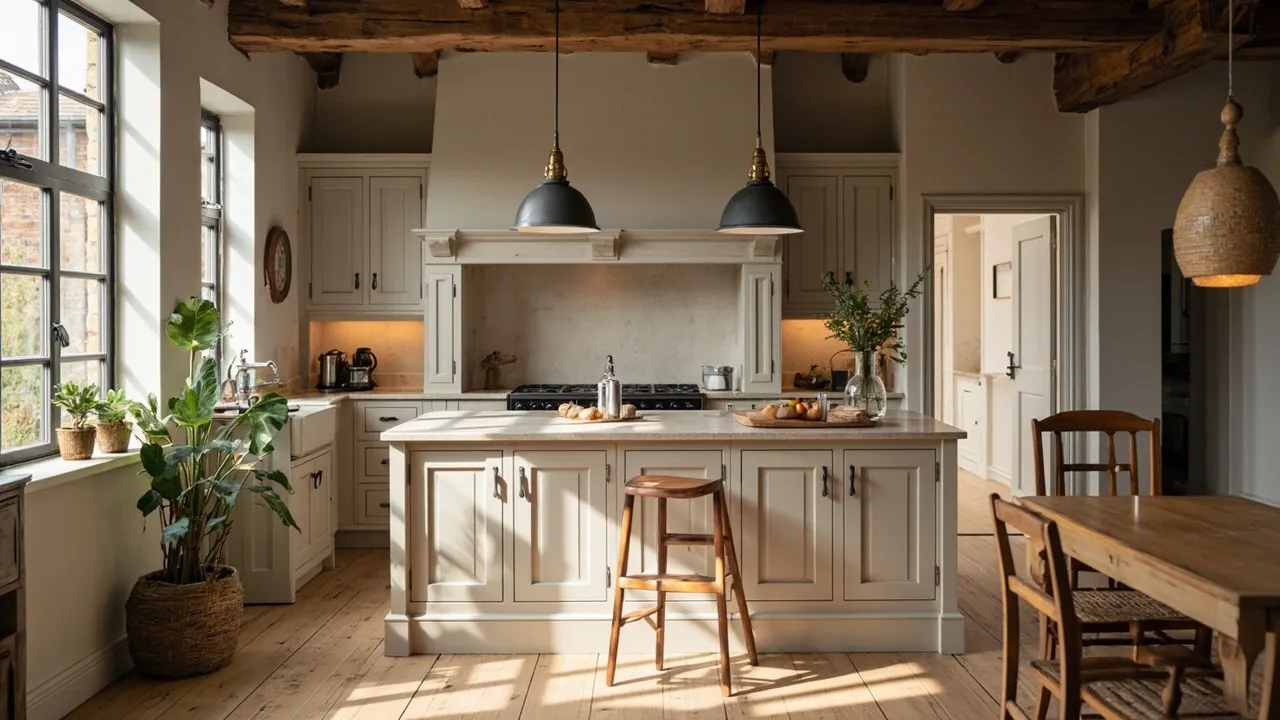
Old Yorkshire houses are rarely square. Stone lintels sit a finger-width proud of the plaster, chimney breasts eat into corners, and floors levelled in the early 1800s still slope gently towards the hearth. A bespoke kitchen is measured into that room rather than squeezed into a range of stock sizes, which is why the units sit flush against an out-of-true wall without a scribing strip hiding the gap.
Where a modular carcass has to be packed out or trimmed, a solid timber cabinetry frame can be planed on site during fitting. The joiner on the day can adjust a side panel by a few millimetres rather than re-ordering a door, and the kitchen goes in cleanly the first time.
Shaker, in-frame, hand-painted and handleless cabinetry, explained
The four cabinetry styles most often asked for are built in the same Honley workshop, but they behave differently over a decade of daily use. Shaker doors, with their plain square frame and recessed centre panel, are simple to repaint and easy to refurbish. In-frame construction, where the door hinges inside the face frame rather than onto it, gives a furniture-grade look and lets a craftsman square up a door on site years later when a house has settled.
Hand-painted finishes in muted, natural tones, including the greys and off-whites mixed in the workshop, age slowly and can be repainted by the maker rather than replaced. Handleless cabinetry looks modern, but the mechanism and its tolerances are the part to ask about; in a handmade kitchen, that detail is built in rather than bolted on.
Common questions about handmade kitchens
How do I know a kitchen is genuinely handmade?
Ask to see an unfinished carcass and a drawer box before you commit. A workshop-built cabinet is made to your room rather than picked from a range, its drawer corners are jointed rather than stapled, and its doors are solid timber frame-and-panel. A maker who builds in-house will show you all three without hesitation.
Who is the best kitchen supplier in the UK?
No single supplier is objectively best; the right maker is the one whose workshop you can visit and whose joinery you can inspect. Look for Guild of Master Craftsmen accreditation, evidence of in-house construction, and a named maker willing to show you drawer boxes and cabinet backs before you commit.
What colour kitchen will not date?
Natural timber and muted, restrained paint colours age better than high-contrast trend colours. A hand-painted kitchen has a further advantage: the doors can be rubbed down and repainted years later when tastes shift, rather than replaced.
To see how a kitchen is actually built, call 01484 666 333 or email info@handmadekitchensyorkshire.co.uk to arrange a visit to the Honley workshop.
What commissioning a workshop kitchen is like
From the first design conversation to the final fit
A commission starts with a practical design conversation at your home or in the Honley workshop. Daniel Fitzpatrick, the founder, measures the room, notes where older walls have settled, and asks how you cook, store pans, and move between the sink and hob before drawing the cabinets.
You then see samples of oak, pine, painted finishes, and worktop options including quartz, granite, and solid wood. Daniel oversees the project from those early decisions through manufacture, checking dimensions and discussing details such as Shaker doors, in-frame cabinetry, dovetail drawers, larders, islands and curved units. The workshop has held Guild of Master Craftsmen accreditation and Daniel has worked with timber for more than 25 years.
The work is built for the measured room rather than selected from a limited set of cabinet sizes. That approach suits period properties around Holmfirth, Huddersfield, Leeds and Wakefield, where an apparently square wall may conceal changes in level that need allowance on site.
Installation is planned as carefully as construction. Oak & Pine by Design fits each piece, makes any necessary adjustments on site, and aligns doors and drawers before the final checks.
Visit the Honley workshop and see the work in progress
A workshop visit lets you inspect a carcass, open a dovetail drawer, and compare solid timber with painted cabinetry. Seeing who cuts, joints, sands and finishes each part is the clearest way to judge a kitchen maker.
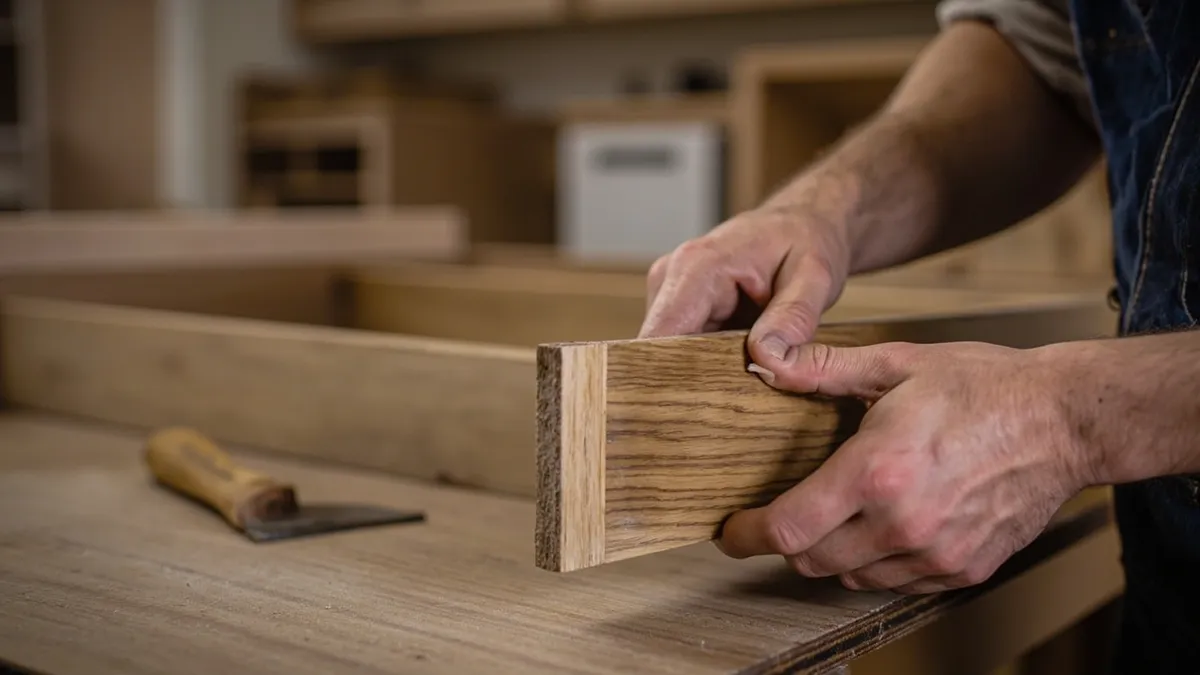
You can book a showroom visit at the Honley workshop to watch drawers, doors and cabinetry come together before commissioning your own handmade kitchen.
Sources
- FSC: furniture products and timber sourcing
See the work for yourself
Photographs only go so far with timber. The grain, the weight of a door and the feel of a drawer running true are things you have to handle. Every kitchen we make is built by hand in our Honley workshop, and you are welcome to come and see one being put together.
To talk through your kitchen or arrange a visit, book a showroom visit, call 01484 666 333 or email info@handmadekitchensyorkshire.co.uk.